

How AI is reshaping management education
– Srinivasan R and Amar Saxena
IIM Bangalore & RT-MSSU
AI is transforming management education, but critical thinking and judgment remain essential for learning and decision-making.
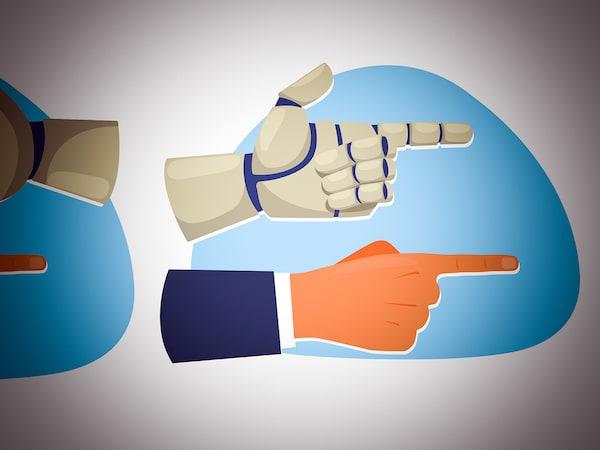
AI may be replacing the “knowing”, but it cannot replace the “thinking”. In fact, the quality of AI’s output depends critically on the quality of human …
There is an unsettling paradox taking shape around us.
For centuries, societies progressed by expanding access to knowledge. The educated were powerful because information was scarce. Universities, libraries, consultants and experts derived their influence from their ability to acquire, process and interpret knowledge that others could not easily access.
Today, generative AI is rapidly dismantling that scarcity. With a few keystrokes, anyone can generate a market analysis, summarise a hundred-page report, draft a strategy memo or build a financial model. Tasks that once required years of training can now be completed in seconds, and often in a qualitatively better manner.
At first glance, this appears to be a triumph of democratisation. Knowledge has become abundant, inexpensive and universally accessible. Yet beneath this achievement lies a deeper and more troubling reality. AI may be replacing the “knowing”, but it cannot replace the “thinking”. In fact, the quality of AI’s output depends critically on the quality of human thought that precedes and complements it.
The difference between a mediocre AI-generated report and an exceptional one is rarely the model itself. It is the prompt. And the difference between a good prompt and a bad prompt is not linguistic skill but intellectual clarity. To ask the right question, one must first understand the problem. To challenge an answer, one must possess judgment. To detect a flawed assumption, one must be capable of critical reasoning. Put differently, AI works best not for those who know the least, but for those who already know enough to interrogate it intelligently.
It goes back to age-old wisdom: There are no wrong answers, only wrong questions. Ask an ambiguous question and you will get an ambiguous answer. The real question, then, is this: Are we, as humans, developing our capability to ask the right questions?
Illusion of Competence
This creates an illusion of competence. Students, and professionals, who rely on AI often feel more competent. But are they?
They can produce polished outputs without understanding a word of them. This is dangerous, especially in management, medicine, law and policy, where flawed reasoning presented with confidence can cause serious harm.
You may have a brilliant summary of a meeting. But do you understand the key message? Can you summarise the meeting in one sentence?
This is the first dimension of the AI paradox. The technology appears to reduce the need for expertise, yet extracting value from it requires deeper expertise than before. A novice may obtain an answer from AI, but only an expert can determine whether that answer is meaningful, complete, biased or simply wrong. As AI reduces the cost of producing answers, the premium increasingly shifts to framing questions and exercising judgment.
The Metacognitive Trap
AI does not just answer questions; it removes the struggle. But struggle is precisely where learning and cognitive development happen. Neuroscience tells us that working through difficulty builds neural pathways. AI short-circuits this process. Students are losing the discomfort that makes them smarter.
This is the second dimension of the AI paradox, and it is even more unsettling. The more we rely on AI to perform cognitive tasks, the less we exercise the mental muscles that enable independent thinking. Human capabilities, like physical capabilities, deteriorate when outsourced. Smartphones reduced our ability to remember phone numbers. Calculators reduced our mental calculation ability. GPS-based online maps weakened our navigational skills. Search engines weakened our memory for facts. Social media shortened our attention spans. AI threatens to weaken something even more fundamental: Our capacity for sustained reasoning.
When students use AI to summarise readings they have not read, they save time but lose comprehension. When managers use AI to prepare presentations they have not thought through, they gain efficiency but surrender insight. When professionals increasingly depend on AI for analysis, drafting and decision support, they risk becoming consumers of intelligence rather than producers of it.
The danger is not that AI will become smarter than humans. The danger is that humans may gradually become less capable of doing the intellectual work that makes them valuable in the first place.
This creates a phenomenon that economists describe as “cognitive hollowing out”. Much as automation replaced routine manufacturing tasks while increasing the value of creative and strategic work, AI is likely to automate routine knowledge work while magnifying the importance of judgment, creativity, ethics, contextual understanding and wisdom. These are capabilities that remain stubbornly resistant to automation because they are rooted not merely in information processing but in human experience, values and social understanding.
The critical factor in almost all complex decision-making is not knowledge, but judgment. Consider a CEO deciding whether to exit a profitable but reputationally risky market. Data can inform, but it cannot decide. Consider a doctor choosing between two equally valid treatment protocols for a patient whose life context makes one far more appropriate than the other. Or a judge sentencing a first-time offender while balancing law, precedent, circumstance and societal impact in a single human decision. Or an investor backing a founder whose numbers are weak but whose conviction and character signal something that the spreadsheet cannot capture.
Business plans may be immaculate, well-structured and well-reasoned. Yet fewer than 5 percent of new launches succeed.
There is a significant human element in all critical tasks. The heavy knowledge lifting performed by AI removes the professional from the process, turning them into a spectator. It reduces risk-taking ability and, consequently, the ability to navigate an increasingly uncertain world.
So, What Should We Do?
Ironically, the future belongs neither to those who reject AI nor to those who blindly embrace it. It belongs to those who learn how to think alongside it.
The winners will be individuals who use AI as an amplifier rather than a substitute for cognition. They will delegate routine tasks but retain ownership of problem framing, interpretation, decision-making and accountability.
After all, we want to learn footballing skills from Messi rather than have him play for us while we sit on the sidelines and watch.
Back to the Basics
In many ways, AI is forcing humanity to rediscover a lesson that philosophers understood centuries ago. Knowledge and wisdom are not the same thing. Knowledge is the accumulation of information. Wisdom is the capacity to discern which information matters, what it means and what should be done about it. AI excels at the former. The latter remains distinctly human.
Academic institutions are standing at an inflection point. The institutions that can navigate this precipice successfully will thrive. Reputation alone does not carry weight. In that sense, AI is democratising the education sector. Hitherto, it has been difficult for a new institution to make headway in an industry dominated by established brands.
Does any institution have the right answer? In fact, is there a right answer?
The critical aspect is to encourage a debate on the future of academia. Institutions that foster such a debate and remain flexible in their approach are the ones that will gain prominence.
