

A Day of Changemaking at IIM Bangalore with Ashoka Fellows
How Business Leaders and Social Entrepreneurs Came Together for a Larger Social Impact
Saturday, 8 August 2026 • IIM Bangalore Campus
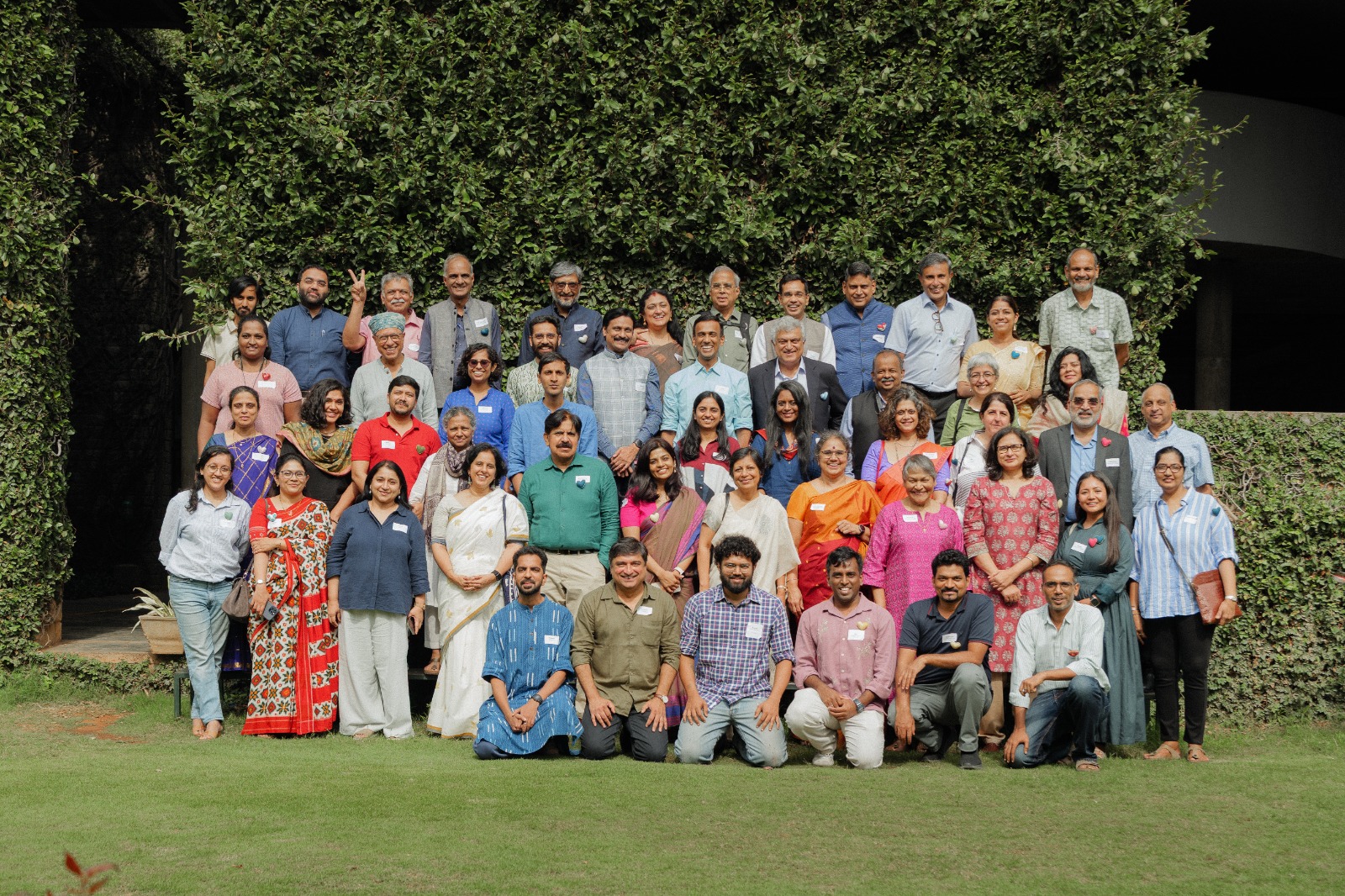
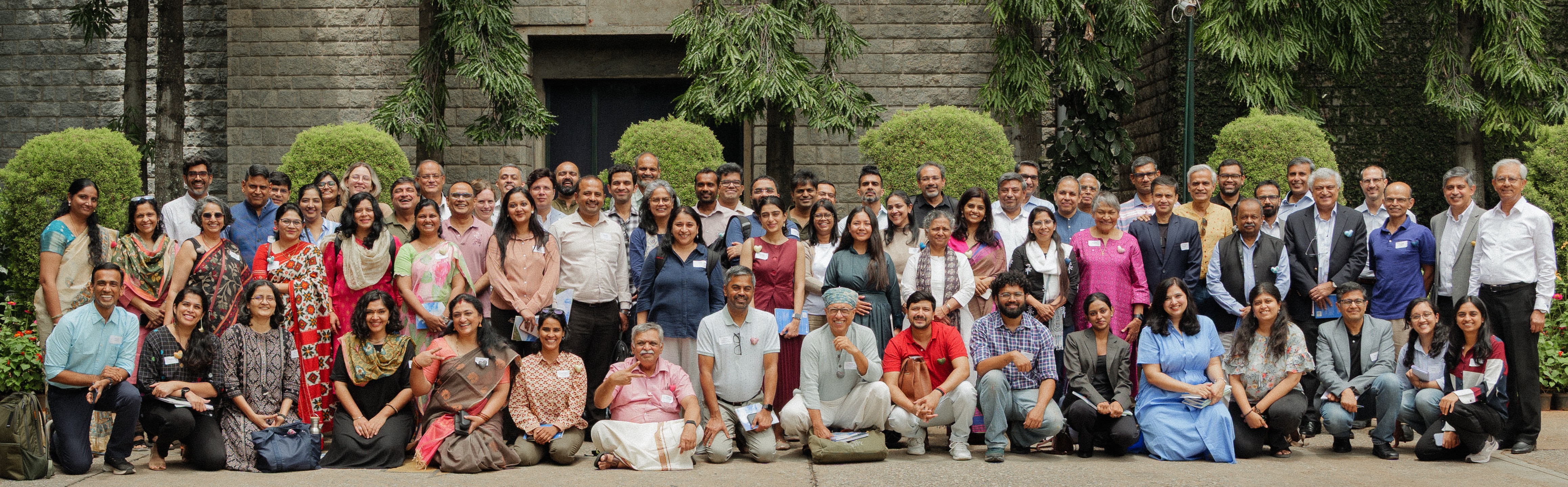
On Saturday, 8 August 2026, the Indian Institute of Management Bangalore (IIMB) partnered with Ashoka Innovators for the public an international network of 4,000 leading Social Entrepreneurs elected as Ashoka Fellows across 99 countries, to host events on its campus:
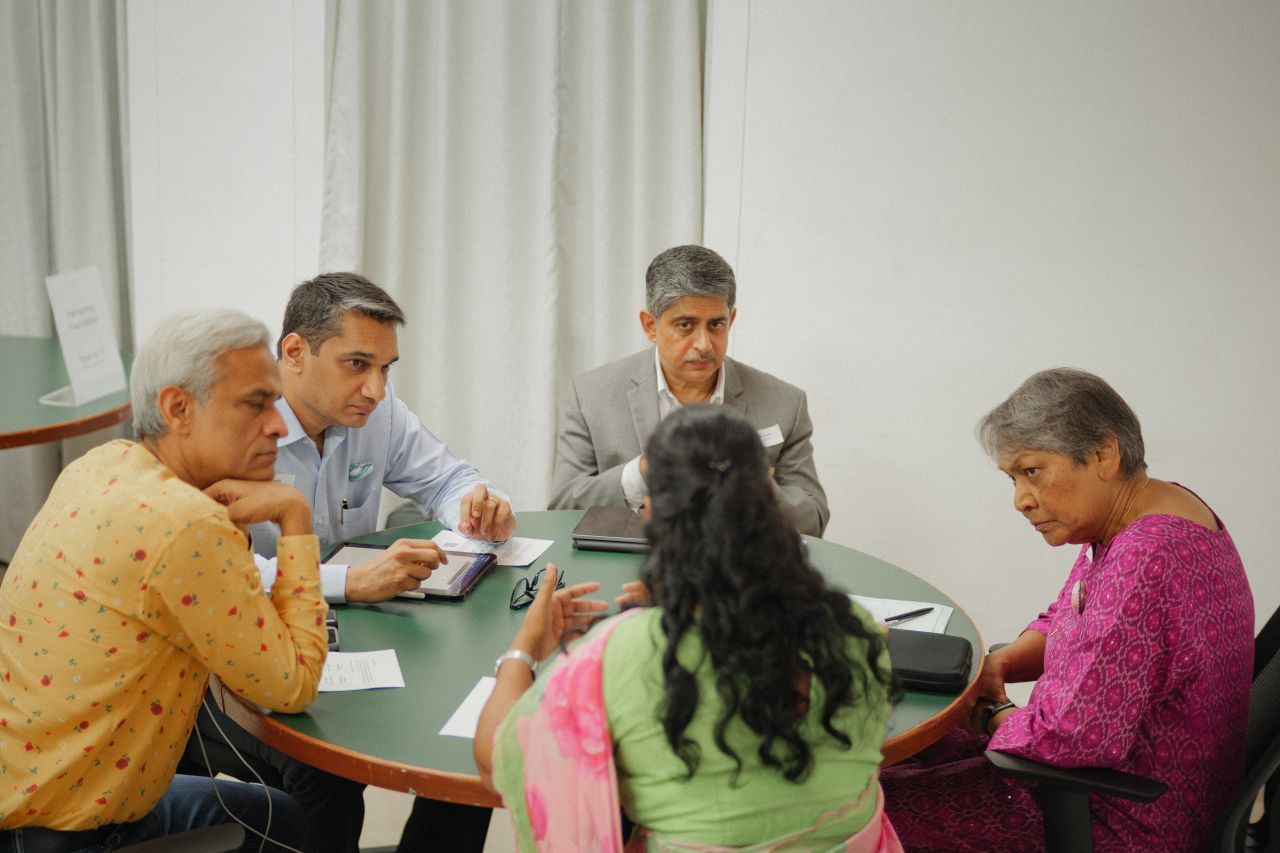
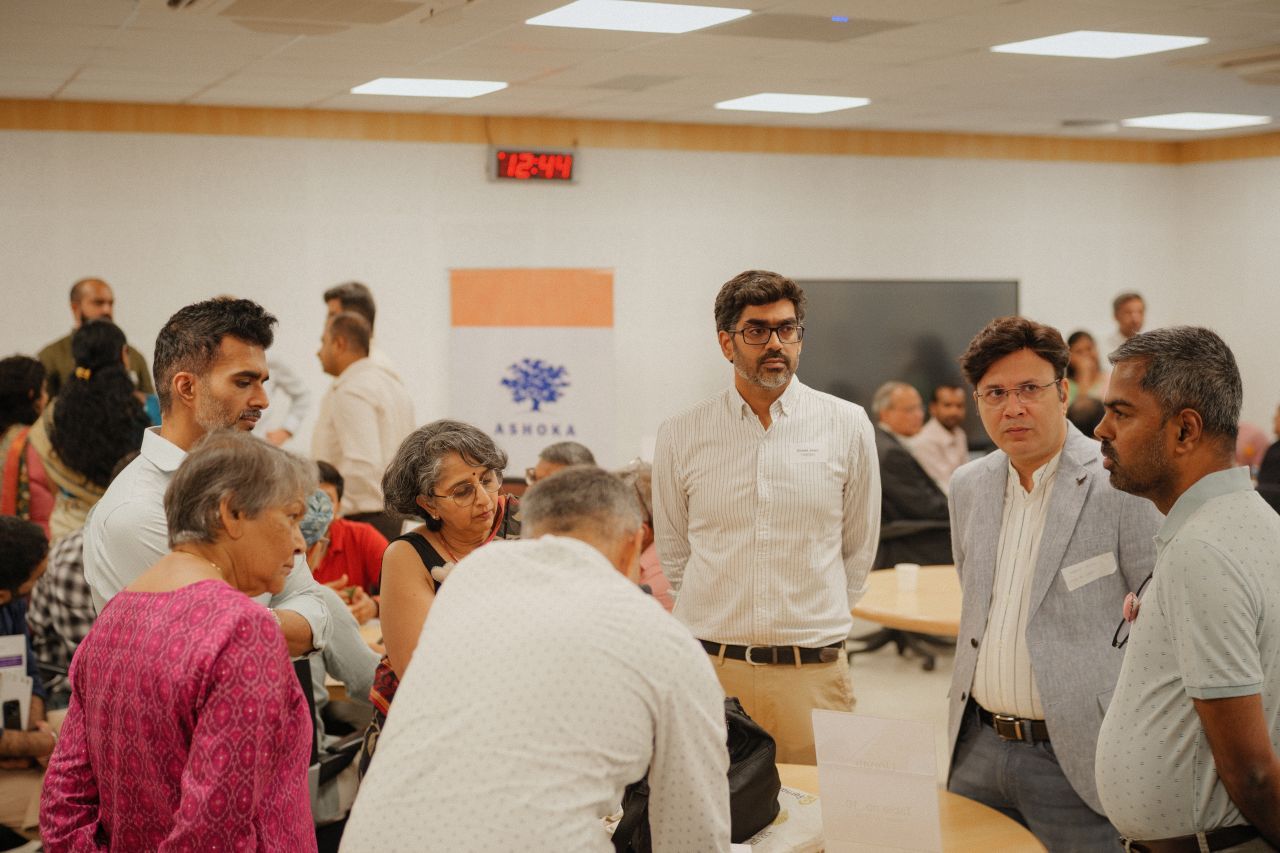
- A morning “Huddle” that paired IIMB alumni and business leaders one-on-one with leading social entrepreneurs. This opened a huge opportunity for the Business Leaders to discover their changemaking, engage with social entrepreneurs and similarly the Social Entrepreneurs found the strategy conversations valuable.
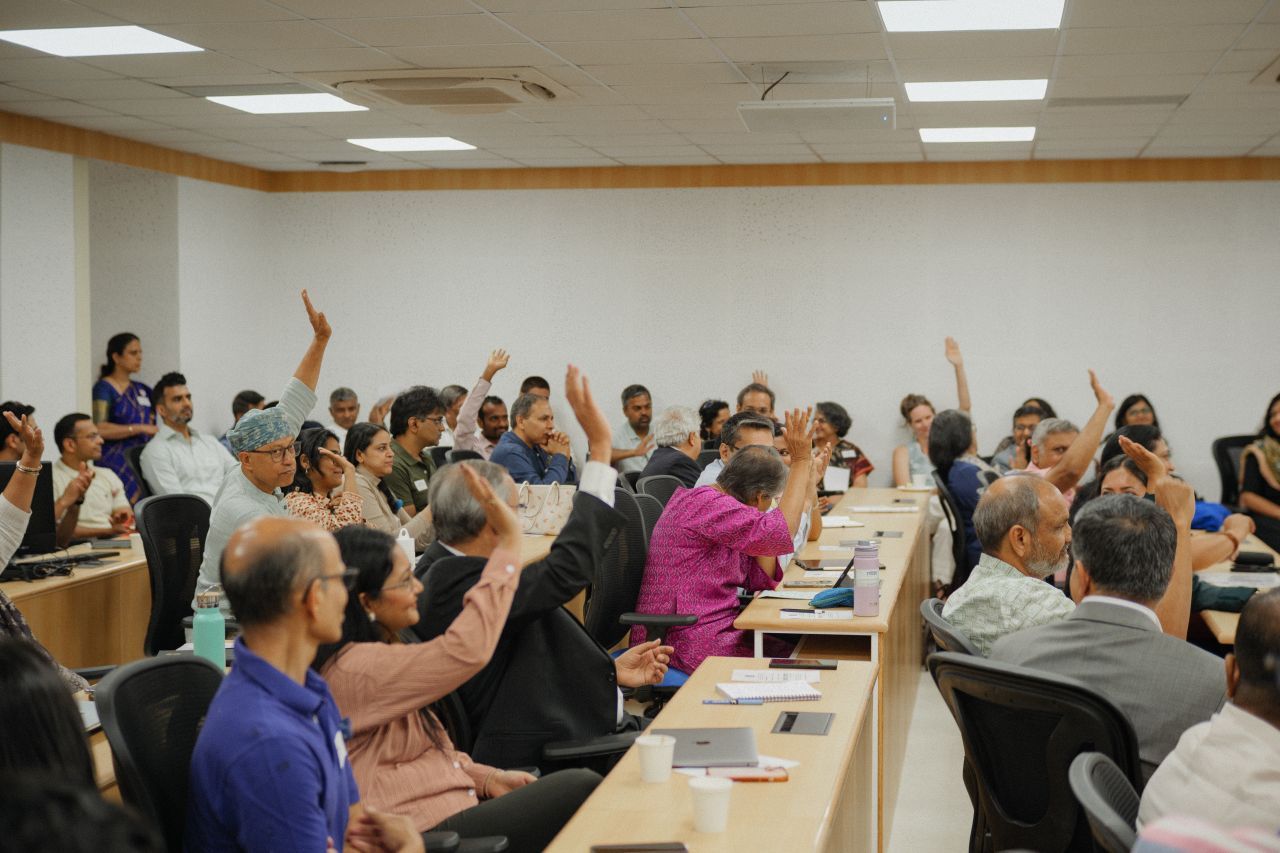
- Afternoon Multi-Stakeholder Meet that brought government, business, academia, philanthropy and civil society together around SDG 17: Partnerships for the Goals. Different formats, one shared thread the conviction that India’s toughest social challenges get solved faster when sectors that rarely speak to each other start talking.
Morning Session: The Huddle — Strategy Meet with Social Entrepreneurs
The Huddle is Ashoka’s signature format for connecting business leaders with social entrepreneurs. Designed uniquely as a set of intense, one-on-one “roll up your sleeves” strategy conversations. For four hours, 14 IIMB alumni and business leaders sat down individually with 13 Ashoka Fellows — the founders of some of India’s most respected social-impact organisations — to work through their real strategic challenges: funding, scaling, organisational design and succession.
Why It Matters — For the Social Entrepreneur and the Business Leader Alike
It is designed as a space where accomplished Business Leaders discover their own role in changemaking by putting their sharpest thinking to work on a cause bigger than their day job. Business Leaders consistently leave a Huddle having reframed how they see their own role: not just an advisor on someone else’s mission, but a changemaker in their own right, with a network, a skillset and an instinct that the social sector genuinely needs. That is precisely why Ashoka wants more alumni to say “yes” to the next one.
The Huddle is built just as much for the Ashoka Fellows on the other side of the table. A Huddle conversation brings something rare: an out of the box, strategic mind that has built and scaled organisations at a completely different order of magnitude, applied for a few focused hours to their hardest problem.
Co-Hosted by IIM Bangalore
| The Huddle was co-hosted by Prof. Sourav Mukherji, Dean (Faculty), IIM Bangalore, who personally invited the IIMB community to take part after experiencing a Huddle himself earlier in the year: “Earlier this year, I had the opportunity to participate in an Ashoka Huddle and witnessed the power of bringing together social entrepreneurs and business leaders from diverse sectors to engage in open, thoughtful dialogue. The quality of the conversations, the generosity of shared experience, and the potential for meaningful collaboration left a lasting impression on me. It was this experience that inspired us to host a Huddle at IIM Bangalore. … A Huddle is a unique space for Business Leaders to discover their changemaking trajectory and bring their talent for social impact.” — Prof. Sourav Mukherji, Dean (Faculty), IIM Bangalore |
The 13 Social Entrepreneurs in the Room
Business leaders and alumni were paired with Ashoka Fellows leading organisations across education, health, disability inclusion, digital rights, civic governance, community reintegration and more, including:
- Brij Kothari — PlanetRead & the Billion Readers (BIRD) Initiative, pioneering Same Language Subtitling to build reading practice at population scale
- Osama Manzar — Digital Empowerment Foundation, digitally empowering rural India
- Dr. Evita Fernandez — Fernandez Foundation, championing midwifery and maternal health
- Christopher Turillo — Medha, building youth employability at scale
- Prachi Deo — Nayi Disha, a lifelong support system for families of children with disabilities
- Meera K. — Oorvani Foundation / Citizen Matters, civic media for local democracy
- Prof. Gopal Naik — Saksham-IIMB, rural school development, nutrition, water and sanitation
- Col. Christopher “Chris” Rego — Sunbird Trust, peacebuilding through education in Northeast India
- Vineet Jawa — TIMBBR & Purusha, the wellbeing and self-leadership of boys and men
- Dr. Beena Chintalapuri — Unnati, cognitive-behavioural rehabilitation in India’s prisons
- Jessica Mayberry — Video Volunteers, India’s largest network of community media creators
- Rigzen Wangmo — Village Lab Foundation, place-based education in Ladakh
- Sivasankar “Shiva” Jaygopal — WinVinaya Foundation, skilling and employment for persons with disabilities
What the Room Discovered
Both sides left with reflections that speak to why this format works:
| Social Entrepreneurs said… | Business Leaders / Alumni said… |
| • Business leaders were open to listening and learning — not there to prescribe or solve. • For-profit and non-profit worlds are not so different after all — just different jargon. • AI and technology are not the preserve of the private sector — they can be levers for the social sector too. • The strategists brought practical inputs, not just promises. • Some pairs stayed in touch and even formed WhatsApp groups to keep collaborating. | • They were struck by the sheer scale and complexity of the problems Social Entrepreneurs tackle daily, and the odds they overcome. • For several, this was the first time they had encountered a particular social problem up close. • “The business of social” became “the socialisation of business” — a genuinely eye-opening reframe. • It was a humbling experience to witness the diversity, audacity and range of the challenges being solved. • Many committed to mobilising their own networks and treating this as the start of a longer engagement, not a one-off. |
Afternoon Session: Multi-Stakeholder Meet on SDG 17 — Partnerships for the Goals
Immediately after the Huddle, a second and distinct conversation convened in Room M-24: a Multi-Stakeholder Meet built around SDG 17, the United Nations Sustainable Development Goal that holds every other goal together. As the invitation to the session put it, SDG 17 “is not a goal but a method” — and advancing it meant bringing people from every corner of the ecosystem into the same room to discover what becomes possible when different strengths meet.
Nearly 40 leaders took part across ten constituencies — government, business, academia, CSR, philanthropy, media, civil-society collectives, intermediaries, policy and social entrepreneurship — including L.K. Atheeq, IAS, Financial Adviser to the Chief Minister of Karnataka; Dr. C.S. Kedar, IAS (Retd.), Chairman of India4IAS and former Additional Chief Secretary, Government of Karnataka; Devesh Kumar, Deputy Director General (Engineering), Prasar Bharati; Jacob Peter, Executive Vice President, Bosch Digital; and Ajit Kumar, Managing Director — Innovation & Build-Up, Deloitte, alongside senior voices from CSR, philanthropy and academia.
The session deliberately had, in the organisers’ own words, “no stage, no audience, no logo, no ego” — just an honest, peer-to-peer conversation about partnerships that none of the participants could design alone from where they each currently stood.
Co-Hosted by IIM Bangalore
| The Multi-Stakeholder Meet was co-hosted and facilitated by Prof. Vasanthi Srinivasan, Professor of Organizational Behaviour & Human Resources Management, IIM Bangalore, who welcomed participants into the space: “Many of the challenges we seek to address — whether in education, livelihoods, health, sustainability, inclusion, or governance — are too interconnected to be solved by any one institution or sector acting alone. Meaningful and lasting change requires partnerships that draw on diverse perspectives, capabilities, networks, and resources. … There is no stage, no audience, and no hierarchy of expertise. We are here as peers, united by a shared commitment to creating a better future.” — Prof. Vasanthi Srinivasan, IIM Bangalore |
A Case Study in Real Partnership
The centrepiece of the afternoon was a fireside conversation between Brij Kothari, founder of PlanetRead and the Billion Readers (BIRD) Initiative, and Devesh Kumar of Prasar Bharati — tracing how a research idea born in a PhD thesis (Same Language Subtitling) became, through nearly three decades of sustained collaboration between a social entrepreneur and India’s public broadcaster, a national broadcast policy now reaching over 120 million weak readers, with a mandate to reach a billion. Participants used this real, lived case to surface the honest patterns — both helpful and unhelpful — behind cross-sector partnerships that actually last.
What Helps Partnerships Work — and What Breaks Them
Working in small mixed-sector groups, participants first named the limiting beliefs that quietly block collaboration — “government is too slow,” “NGOs only talk about problems,” “corporates only care about branding” — and tested which were actually true. They then mapped what each sector brings to a partnership and what it needs from others, before distilling their collective experience into two lists:
Enablers of cross-sector collaboration
- Trust, listening, and repeated, boots-on-the-ground relationship-building
- Alignment on mission, goals and how resources will be shared
- Making space for different points of view, and real, defined expertise on the table
- Agility, risk appetite and an acceptance of failure
- A shared willingness to not worry about who gets the credit
- Clear outcomes, a structured framework, and identifiable key stakeholders
Disablers of cross-sector collaboration
- Power asymmetries and misaligned incentives between public and private partners
- Leadership changing hands mid-partnership, without institutional continuity
- Hierarchy that lets one partner dictate direction to the rest
- Vague, undefined plans — talk without a concrete project
- No sustainability planning once initial funding or energy runs out
| “Collaborations don’t happen; they have to be made to happen.” |
The session closed with participants naming concrete commitments and next steps to carry their new connections into ongoing partnerships — turning a single afternoon of honest conversation into the start of longer collaborations across sectors.
Be Part of the Next One
Both sessions on 8 August were, by every account, a resounding success — Ashoka’s own note of thanks to IIMB described the day as one that left alumni “with valuable learnings and insights from the social entrepreneurs” and gave them “a great avenue to meet changemakers and reflect on their own role in changemaking,” while the social entrepreneurs found “great value in meeting such supportive business leaders,” with many continuing to engage well beyond the day itself.
IIM Bangalore and Ashoka plan to keep bringing these two communities together. Alumni, business leaders and anyone in the IIMB ecosystem curious about the Huddle format or future SDG 17 multi-stakeholder convenings are warmly invited to reach out.
| Want to know more, or join a future Huddle? Write to IIMB Alumni Office at alumni@iimb.ac.in |
ABOUT ASHOKA
Ashoka, Innovators for the Public, coined the term “social entrepreneur” and built the field itself when it was founded in 1980. Today it is the world’s largest network of social innovators — over 4,000 Ashoka Fellows working across 99 countries, together reaching an estimated 650 million people every year. Four Fellows are Nobel Peace Prize laureates. Ashoka India, launched in 1982, is one of the organisation’s largest hubs, home to 550+ Fellows and 43 Ashoka Young Changemakers. Ashoka’s belief is simple: everyone can be a changemaker — and the fastest way to solve society’s biggest problems is to bring social entrepreneurs into the same room as the business leaders, policymakers, and institutions who can help their ideas scale.
