

Alumni Author: Desi Disruptors – Vikrant Pande, PGP 1992
India’s business landscape is shaped by brands that have not only achieved commercial success but have also transformed consumer behavior, created entirely new categories, and remained relevant across generations. In his latest book, Desi Disruptors: Timeless Lessons from Iconic Indian Brands, Vikrant Pande (PGP ’92) explores the stories behind some of India’s most successful brands, uncovering the consumer insights, strategic decisions, and marketing innovations that helped them become household names.
In this conversation, Vikrant reflects on the making of the book, the lessons entrepreneurs can learn from enduring brands, and the unique characteristics of the Indian consumer that continue to shape the country’s dynamic business environment.
What gap in the conversation around Indian brands and business storytelling did you hope Desi Disruptors would fill?
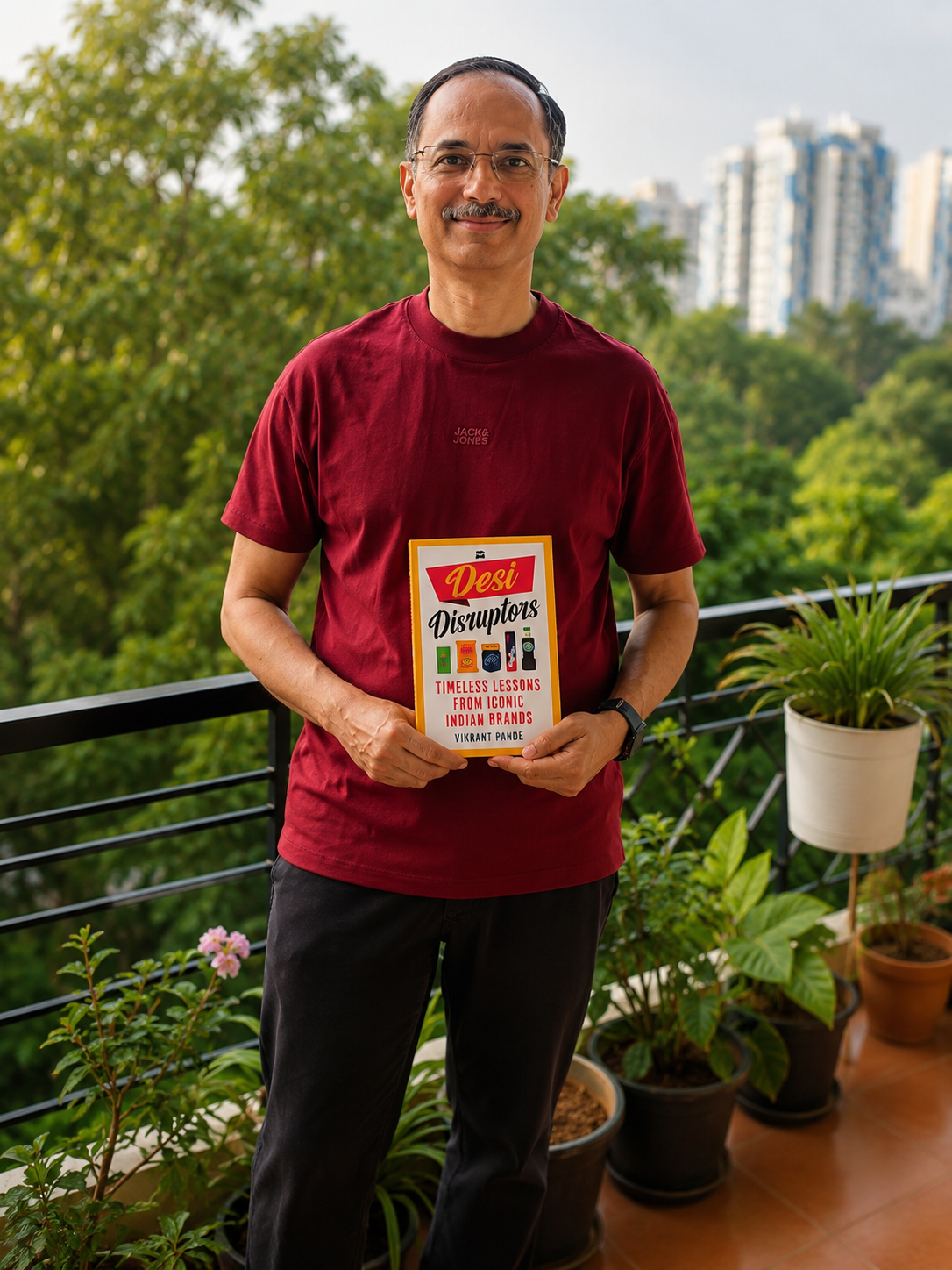
Desi Disruptors is the first book that analyses a brand’s success from the point of view of how the correct insight led to the appropriate positioning for the brand and created a communication that addressed the insight, the core problem that the customer had, and hence led to the brand’s success in disrupting the market or, in other cases, creating a brand leader.
Most books don’t talk of the core insight that made the brand a leader. Business articles talk about metrics that define success, but not about insights.
While researching the book, did you notice any uniquely Indian patterns in how iconic brands build trust and longevity?
Indians are not frugal. They are value-conscious. Brands that are able to offer value for money while addressing the core issue are able to command a premium. Look at Vande Bharat. By providing a quality travel experience, Vande Bharat is able to command a premium compared to, say, Shatabdi Express.
Indians are loyal to the brand, provided the brand stays loyal to the core issue. The brands that deviated after having tasted success will be rejected by Indians. Today, we see that happening with brands that are being consumed by new-generation customers.
Many of the brands featured in the book have survived massive shifts in consumer behaviour. What separates enduring brands from merely successful ones?
Enduring brands have remained core to their proposition, addressing the main problem the customer faced and providing a solution for it.
Maggi stuck to its focus on children, as Nestlé believed that the children would grow up and become adult consumers and spread the word. For decades, Maggi has been focused on the hungry children concept. Noodles are an adult product in other countries, but India was different.
The same applies to many other brands. Taj continues its Tajness factor and unique Taj experience, making the guest feel at home. A Volvo experience, even today, is so good that it has become a generic name for quality bus travel.
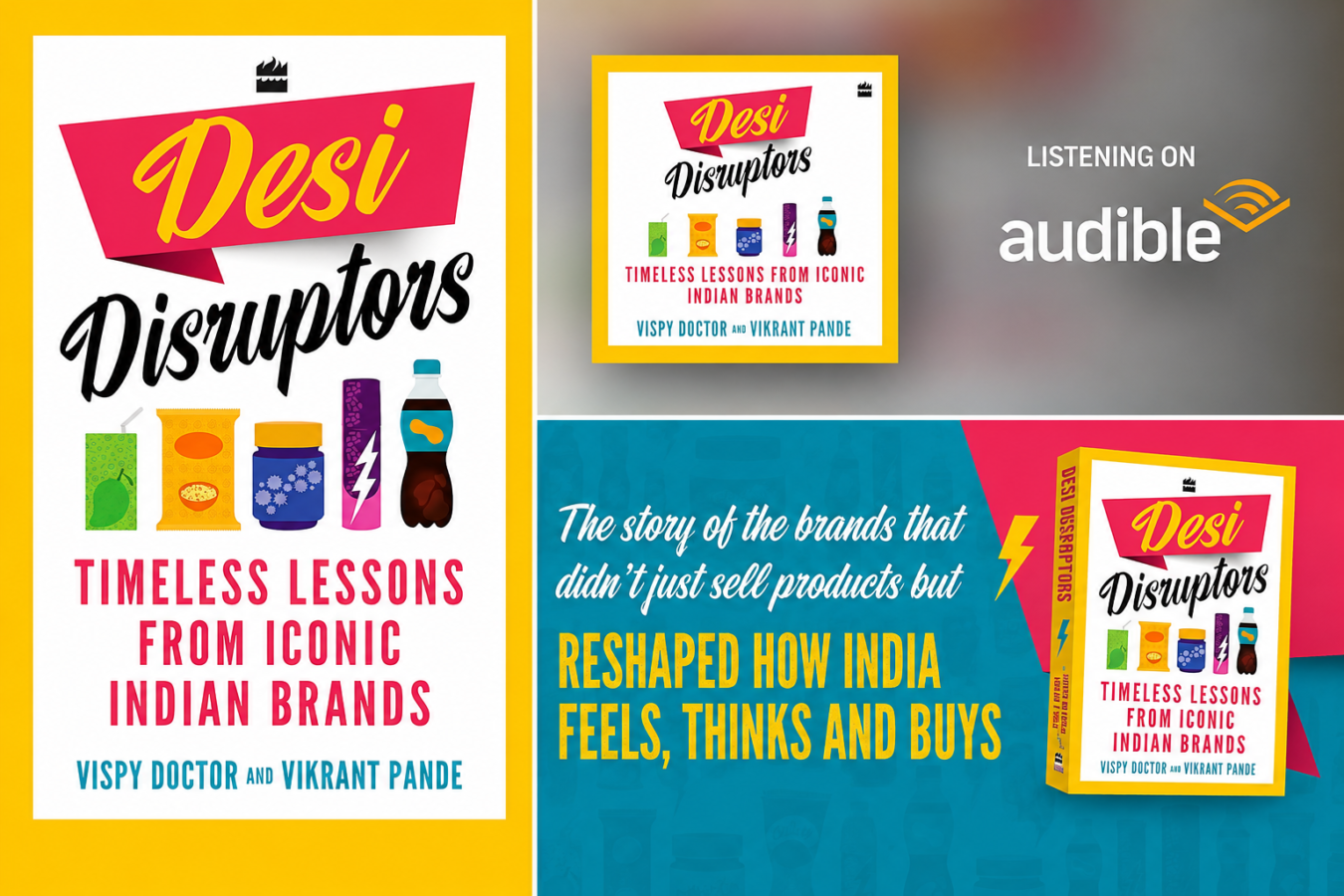
Indian consumers today are far more aspirational, digital, and globally exposed than before. How should Indian brands evolve without losing their core identity?
Indian brands will continue to be challenged. The core identity is the positioning, the promise the brand makes, and the right communication which tells the story. Brands have to evolve, but they need to remain true to what they stand for.
Brand extension is thus a huge temptation brands need to be wary of unless they are extending into similar categories. An Aashirvaad atta can extend to besan, as they are adjacencies in the kitchen. Maggi masala and noodles go well. But one has to be careful.
As I mentioned above, value for money is crucial for the Indian consumer. She doesn’t mind paying more if the value derived is worth it. Jockey is a great example. It is more expensive but provides quality in line with its higher price demand. So is Speedo, which is from the same company which makes Jockey.
Thums Up evolved keeping in mind the changing definition of a macho man who was an intelligent male taking risks and not sheer bravado of thrashing some goondas who are troubling a lady. I have talked about the bungee jumping ad in the book. It is a fascinating story about how the brand identified the evolving definition of a macho man.
Was there a founder story, strategic decision, or brand journey in the book that changed your own perspective on business or leadership?
One of the most remarkable yet literally unknown marketing geniuses in our country is Darshan Patel, who founded Paras Pharma, sold it to Reckitt Benckiser, and then started Vini Cosmetics and launched FOGG. His earlier brands were Livon, Krack Cream, Moov, etc.
He lives by the credo of observation and deriving insights not by asking questions but by discovering insights which, in hindsight, look almost ‘commonsensical’.
Nestlé’s decision to find the right gap for pitching Maggi as a daily consumption snack came from hundreds of focus groups. I was amazed at the conviction of Volvo India’s first employee who ignored market research which said there is no scope for such an expensive bus in India while it was very clear that inter-city bus travel needed what Volvo was offering.
Today all these brands are leaders. The conviction came from knowing what the customer wanted and not by asking. I realized that one has to be a great listener and read between the lines what my customer, employee, distributor is telling me. I realized the power of silent observation and the power of strong conviction where the promoter is willing to back the brand with relentless communication, as Darshan Bhai does for all his brands.
The word “disruption” is often associated with startups and technology. How do you interpret disruption in the context of legacy Indian brands?
Disruption is when a new brand is able to create a blue ocean for itself, the way Vicks, Maggi, Volvo, Whisper, Goodknight, and many others did.
Disruption is when a brand creates a solution for a problem which already exists but no one has tried to solve it, like in the case of Livon (knotty hair) or Krack Cream (cracked heels) and many such brands.
Disruption is creating a brand from a commodity like Aashirvaad atta, Ambuja Cement, or Tanishq.
Disruption is also when a brand beats competition by positioning itself as a much superior option like Moov (beating Iodex), FOGG (beating Axe and Engage), and Thums Up beating other colas.
In an era obsessed with rapid growth, what can younger entrepreneurs learn from brands that were built patiently over decades?
Stick to the core proposition but be aware of the changing trends and make subtle changes which align with the new generation.
A brand can get business for a while, but if it is not addressing the core issue, it will die. Young entrepreneurs need to identify gaps. There are many gaps, especially in health and nutrition and areas like these, where an honest brand can disrupt a legacy brand as the new generation is looking for transparency in how the brand communicates its ingredients.
There is a growing awareness of health. There is a lot of information which a brand cannot hide. These are the opportunities for a new entrepreneur to take advantage of.
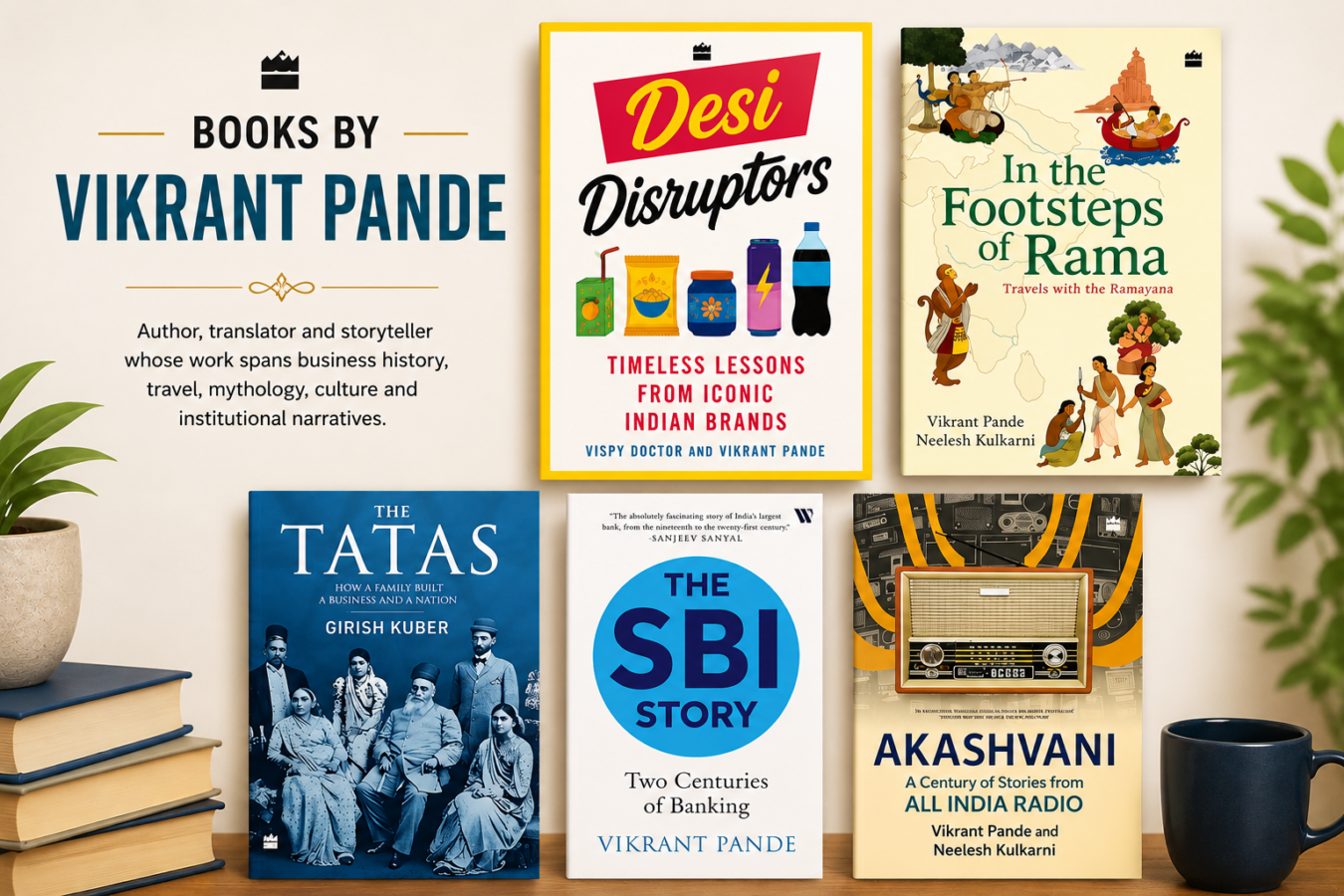
If you had to identify one emerging Indian brand today that has the potential to become a future “Desi Disruptor”, which qualities would you look for?
The brand has identified a gap that is large enough to make business sense. The brand has found a clear problem and a clear proposition that addresses the issue. The brand is honest and communicates the positioning well.
Today, as I said earlier, there are many such brands emerging, especially in food, health, and nutrition areas.
Having worked across leadership, strategy, and now authorship, how has writing this book shaped your own understanding of India’s business landscape?
India is a complex market with regard to consumer tastes, distribution mechanisms, brand loyalties, customers across generations, emerging quick commerce and other platforms, and social media consumption. It is a challenge as well as an opportunity.
One cannot paint India with one brush. Most multinationals fail if they try to copy-paste their strategy from other countries to India. At the same time, India offers amazing opportunities for brands to succeed.
Indian customers are discerning, value-conscious, and can be loyal if treated well.
What conversations do you hope this book sparks among young professionals, founders, and business leaders?
I hope this makes them open to listening, enhances their conviction after having heard and observed their potential consumers, encourages them to be open to anecdotal evidence as it sometimes tells more than formal research, and motivates them to listen to those in the field—the sales guys, the distributors, those far away from head office.
I hope that people realize that research is not about asking questions but about deriving answers.
David Ogilvy’s famous quote is “The trouble with market research is that people don’t think what they feel, they don’t say what they think, and they don’t do what they say.”
I love that.
Through Desi Disruptors, Vikrant Pande offers a fresh perspective on how iconic Indian brands are built—not through metrics alone, but through deep consumer understanding, sharp insights, and unwavering conviction. His reflections underscore the importance of observation, authenticity, and staying true to a brand’s core proposition, even as markets evolve. At a time when businesses are navigating rapid technological and societal change, the lessons from these enduring brands serve as a reminder that lasting success often comes from solving real problems, listening closely to customers, and building trust over time.
