

Alumni Author & Screenwriter: Main Vaapas Aaunga – Nayanika Mahtani, PGP 1992
In this conversation, we speak with Nayanika Mahtani, an IIM Bangalore alumna, author, and screenwriter whose journey spans investment banking and international storytelling. Now based in London, she has built a body of work that explores memory, identity, and the emotional truths that lie beneath history.
Her latest project, Main Vaapas Aaunga, brings her into collaboration with filmmaker Imtiaz Ali, engaging deeply with the legacy of Partition through a lens that is both personal and universal. What emerges is not just a film, but a reflection on how stories take shape—often quietly, over time, and in ways that feel both inevitable and deeply intimate.
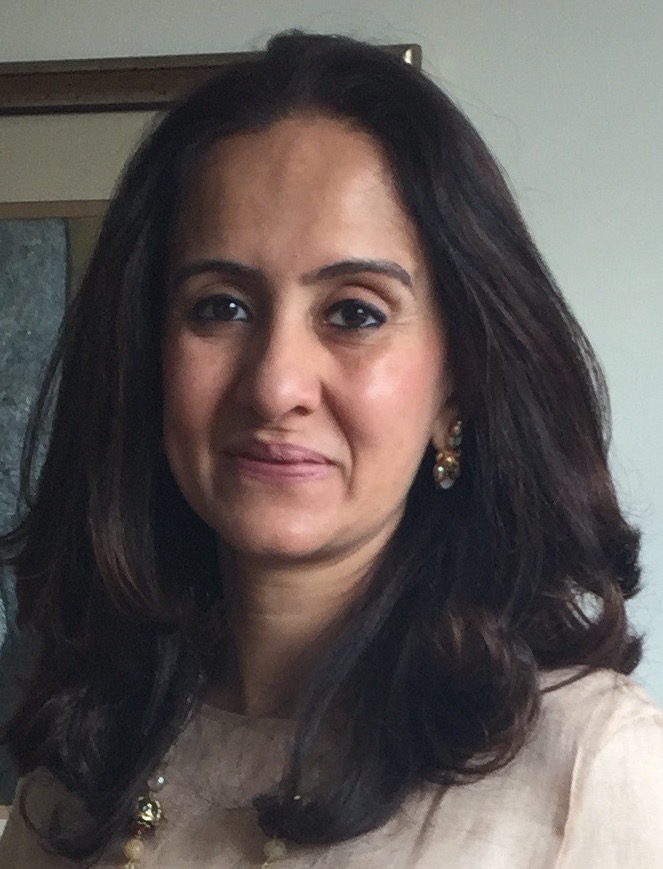
You’ve spoken about how “stories choose their tellers and their timing.” With Main Vaapas Aaunga, did this story find you, or did you consciously set out to explore it?
I’ve come to believe that stories find us long before we recognise them. They take root quietly, sometimes years before they surface, and then, at a moment of their choosing, they emerge.
Main Vaapas Aaunga felt very much like that. Perhaps, somewhere deep within, I was always drawn to the silences around the Partition–the stories that were never fully voiced, only inherited. But I couldn’t have imagined that I would one day have the opportunity to tell this story with a brilliant filmmaker like Imtiaz Ali and such an extraordinary cast and crew. Or that a serendipitous conversation at the Dehradun Literature Festival with Ruskin Bond and Imtiaz Ali would lead me to it.
Over time, I’ve come to feel that storytelling is not entirely an act of will. Something aligns–the right people, the right moment–and the story begins to take shape, almost imperceptibly, as though it existed long before us, waiting to be uncovered.
This film is set in the Partition era. Do you have a personal connection to that history? How do you balance emotional truth with storytelling?
The Partition is more than history for me; it is deeply personal. My grandparents were among the millions displaced. My maternal grandmother’s family remained in Sargodha, in what became Pakistan, their lives saved by their Muslim neighbours during the violence.
My grandmother, however, was already married and living in Delhi. She spent the rest of her life separated from her parents and siblings. I remember, as a child, watching her family visit India years later, and wondering why they had to report to a police station each day of their stay.
However, what has stayed with me most is the absence of bitterness. Despite everything, my grandparents carried no rancour towards the “other”. Perhaps because they had witnessed, at close quarters, that suffering was shared—and that humanity often endured where politics failed.
My writing, in many ways, is an attempt to honour them and the millions like them who carried their histories with such quiet resilience and dignity. I find myself drawn to try and say what was left unsaid—to reclaim the emotional residue of history. Stories may not change the past, but they can hopefully attempt to ensure it is not forgotten.
For me, storytelling is not about recreating events, but about accessing their emotional truth. That process can be demanding; it asks for a certain vulnerability, and a willingness to sit with what is unresolved.
My novel Across the Line, which is also rooted in the Partition, emerges from a similar impulse. I’ve often felt there is such a thing as genetic memory—a connection to places and people we have never directly known yet somehow recognise. It is an idea that resonates with me deeply, both as a writer and as a reader.
Some stories take us closer home, closer to ourselves, and I believe this film is one such story.
You collaborated with Imtiaz Ali on this project. What did that creative partnership look like?
Working with Imtiaz has been both a privilege and a deeply enriching experience. He brings an extraordinary empathy to storytelling, one that is instinctive, generous, and profoundly humane.
To my mind, at the heart of our collaboration was a shared sensibility: a belief that stories must be felt before they are shaped. That emotional truth cannot be compromised.
What I valued most was the openness of the process—the space to explore and to refine. And watching him direct the material on set was, in many ways, an absolute masterclass. It has been an immensely meaningful creative journey, one that will stay close to my heart.
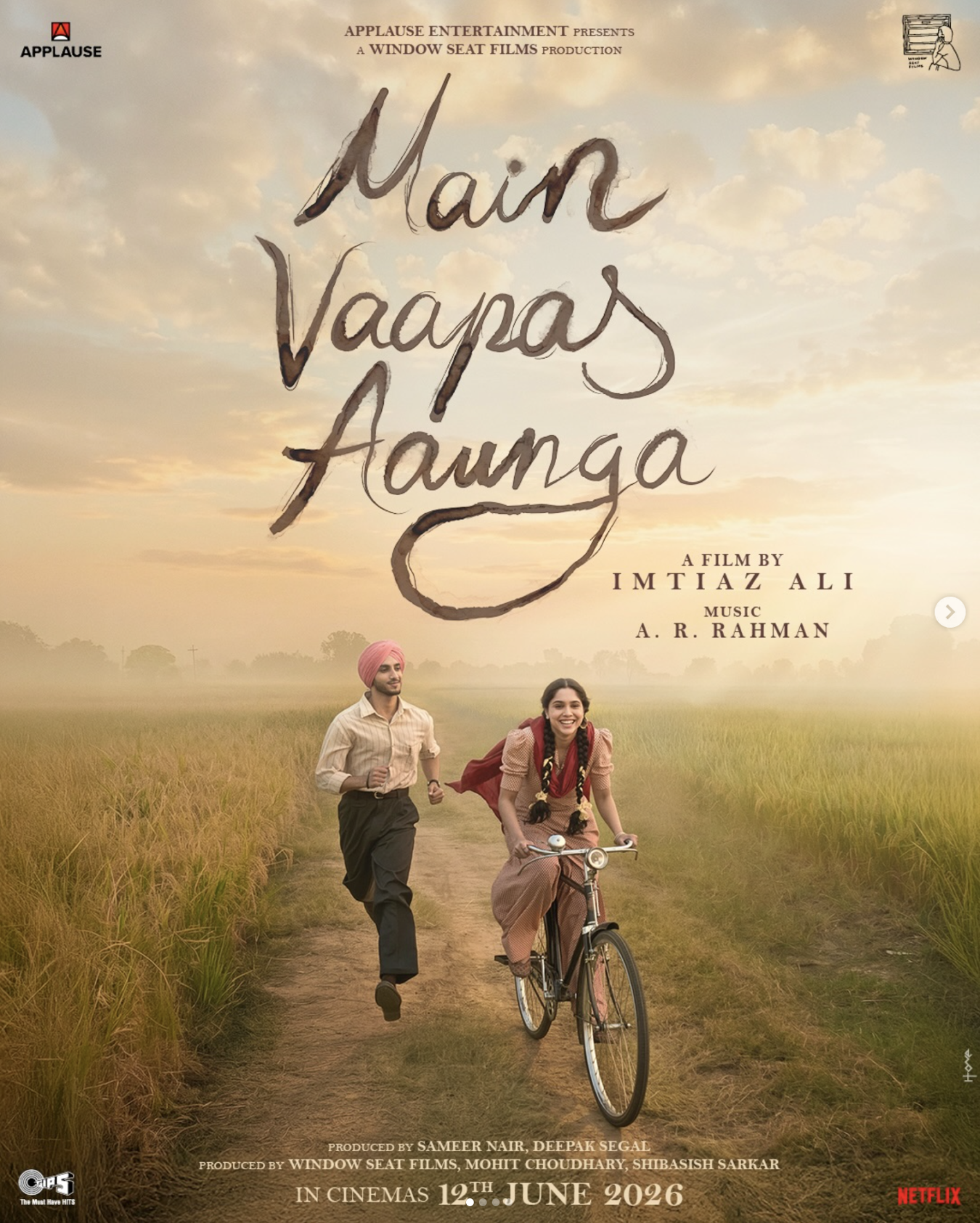
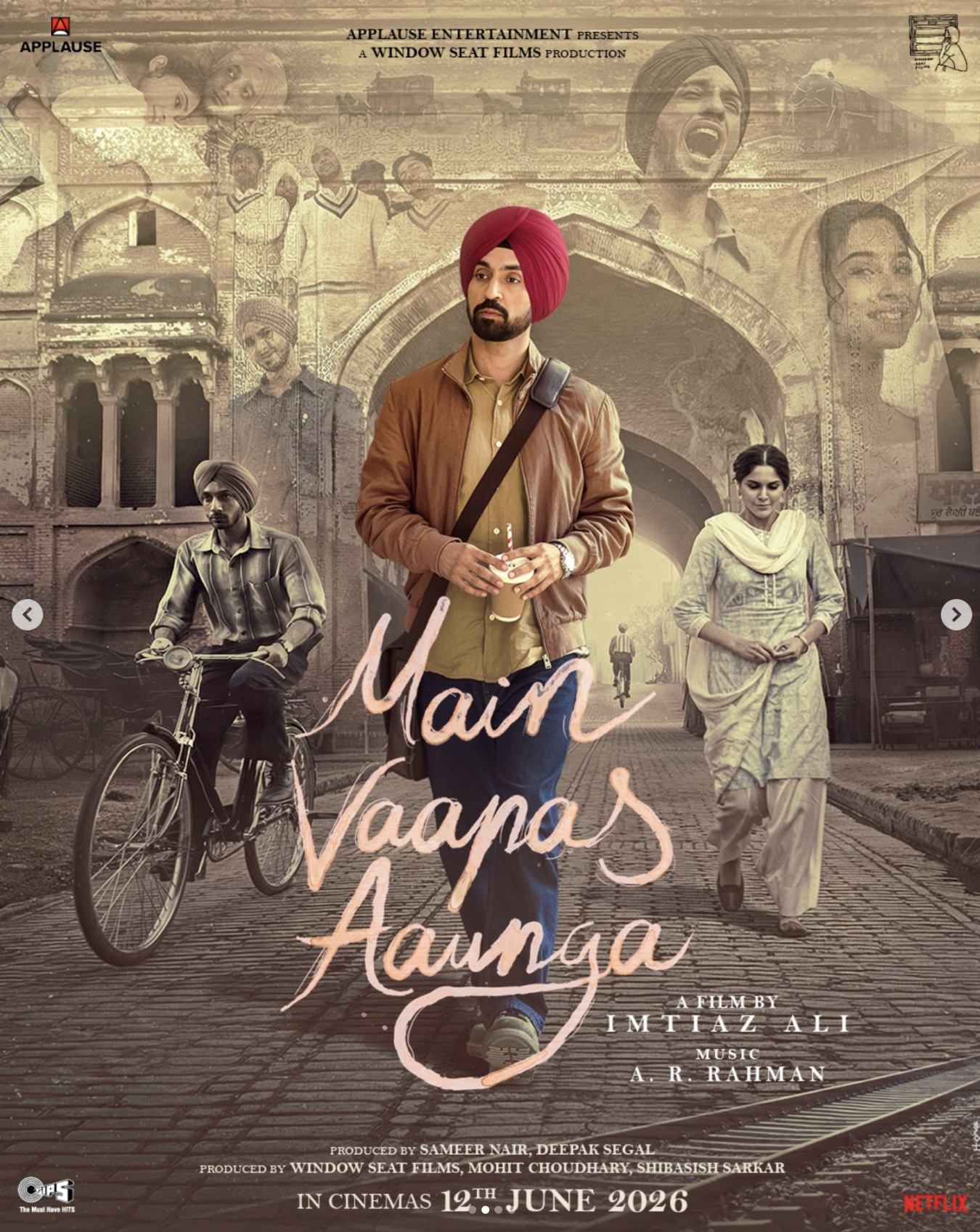
Did the characters take shape first, or did casting influence their evolution?
The characters came first. They arrived as we wrote, with their emotional arcs and inner lives forming the spine of the story. Casting came later, once the screenplay had been completed.
And yet, a screenplay is never really the final word, like say a novel is, because when actors inhabit those roles, something shifts. The characters begin to breathe in ways you hadn’t quite imagined and take on a life that extends beyond the page.
With a cast including Naseeruddin Shah, Diljit Dosanjh, Sharvari, and Vedang Raina—and music by A. R. Rahman—when did the story begin to feel real beyond the page?
Arriving in Punjab where the shoot was happening and being on the set felt absolutely surreal and magical. There is a moment on set when something changes and the written word comes to life, and I will never forget that.
Watching Imtiaz’s soulful brilliance, and Naseer Saab, Diljit, Sharvari and Vedang bringing such depth and nuance to their performances, was quietly overwhelming—their eyes telling a million untold stories.
The music by A. R. Rahman, with lyrics by Irshad Kamil, added the emotional depth that only artists with their genius can create.
For me, it was humbling and deeply moving: to see something imagined become something far more expansive than I had ever envisaged.
Across your work, you engage with history, identity, and complex human experiences. Do these themes emerge consciously?
For me, writing has always been a way of making sense of the world.
I don’t consciously return to particular themes, but I do notice that certain questions persist—around identity, belonging, memory, and how we carry the past within us.
Perhaps we all revisit the same emotional landscapes in different ways over time. Writing has always been the only way I know.
Your journey spans investment banking, writing, and now international film. What would you say to alumni considering a significant career shift?
I began my career in investment banking after completing my MBA at Indian Institute of Management Bangalore—a path I was gently nudged towards as the pragmatic choice at the time, even though my heart was set on storytelling, and on acting in musical theatre in particular.
In retrospect, I am deeply grateful for those years at the IIM and in banking. They broadened my perspective, gave me rich life experiences and enduring friendships, and provided the scaffolding for what followed—offering me, eventually, the financial freedom to pursue writing, later in my career.
If I reflect on the challenges such a shift entails, it is, above all, a question of courage. There is the obvious courage required to step away from a very comfortable salary. But more significantly, there is the courage to place what you have created before the world. Not just before colleagues, a boss, or a client—as in most professions—but before anyone who might read your book or watch your film. And that can be very intimidating, as you could fail spectacularly and very publicly.
But I think I had reached a stage in my life where doing something was less scary than not doing it. That realisation was, in itself, liberating. I took the leap into writing books and films without any formal training, trusting that I would find my way as I went along.
So, if I were to offer any advice, it would be this: if there is something you truly want to try, do not let the fear of failing hold you back. But go into it knowing that books, and especially films, have long gestation periods, so don’t let go of the day job until you can afford to.
If there is one lesson that has stayed with me, it is that careers need not be linear. It is possible—and perhaps even essential—to explore, to evolve, and to allow oneself the space to change direction. The skills one acquires in one field often become unexpectedly valuable in another.
And lastly, I would say, one must not wait for the perfect time. That perfect time is now.
As you look ahead, are there stories you find yourself returning to?
Stories have, in many ways, been a refuge for me—and I hope there are always stories I can return to.
At a recent talk by Salman Rushdie, he shared something that stayed with me. After the attack on his life, he said there was a long period when he did not know if he would ever write again. And then, one day, some years later, he woke up to find that the stories had returned—and he was simply very glad to meet them again.
I think of that often. And I hope that, for me too, there will always be more stories than there is time.
I am currently working on new films and series, each quite different from what I have done before. What continues to excite me is the collaborative nature of storytelling and the opportunity to keep pushing boundaries using art.
At its core, I think writing remains deeply personal. I often feel that I write to complete conversations that were left unfinished. To honour silences. To understand. It is how I come to terms with what I cannot control.
I write each day and then, in a sense, I let go. I trust that the stories will find their way to where they are meant to be.
And as I said at the start, I do believe that stories choose their tellers and their timing. So I show up to write, day after day—hoping, quietly, that the galaxy will take note and do its part, and that the stories hurtling through those unseen portals might choose me.
I suspect it is this stubborn belief that keeps me writing.
At its heart, this conversation is about more than a film—it reflects a way of seeing the world through stories. From navigating a shift away from investment banking to building a career in writing and film, Nayanika Mahtani’s journey is shaped by both courage and conviction.
As she continues to explore new narratives across books, films, and series, one idea remains constant: that stories have a life of their own, choosing their moment and their teller. And perhaps, as she suggests, the role of the storyteller is simply to show up—to listen, to write, and to trust that what needs to be said will eventually find its voice.
