

Alumni Author: The Last Writer of Kolkata and Other Stories – Shakti Ghosal, PGP 1984
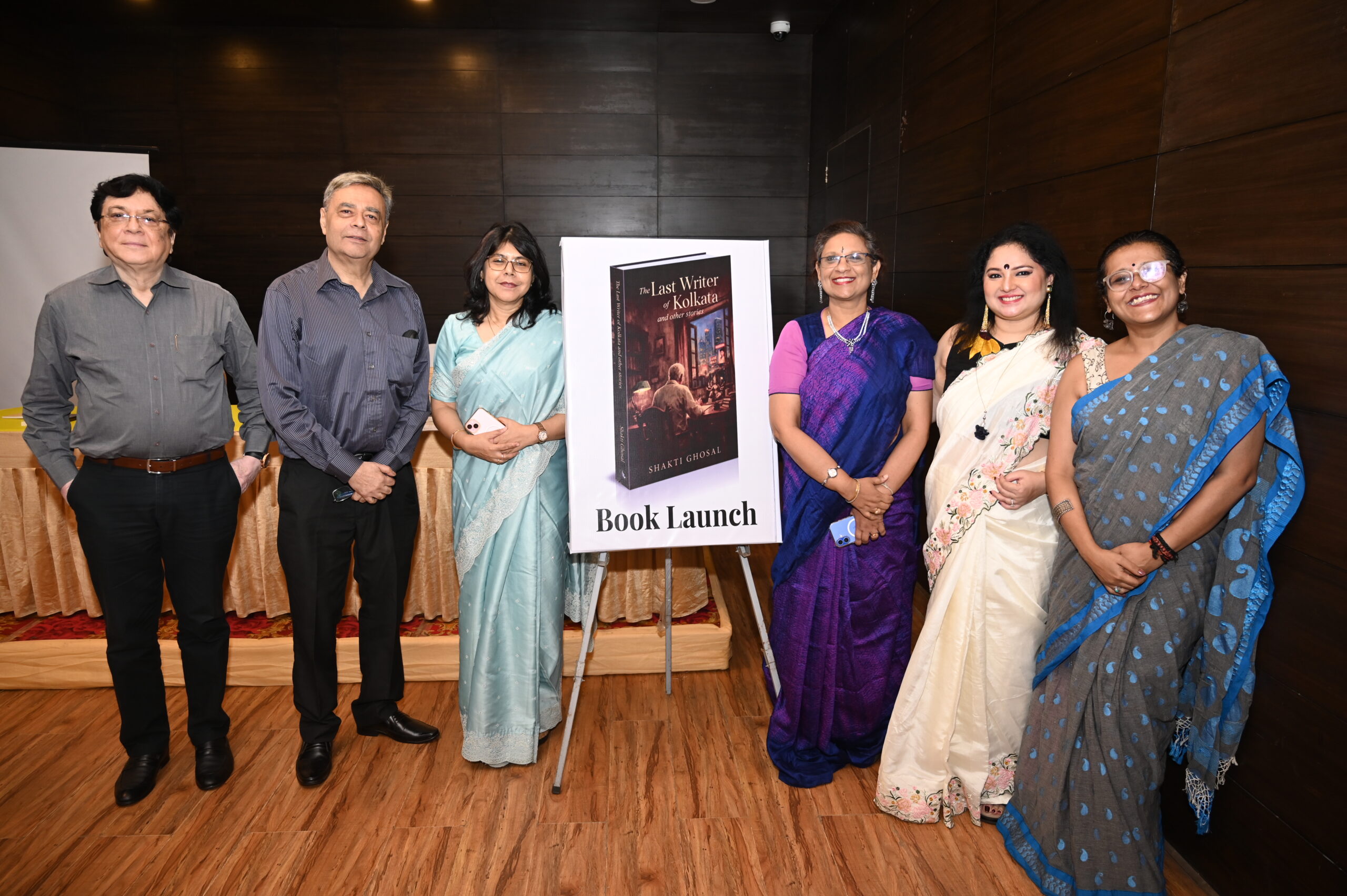
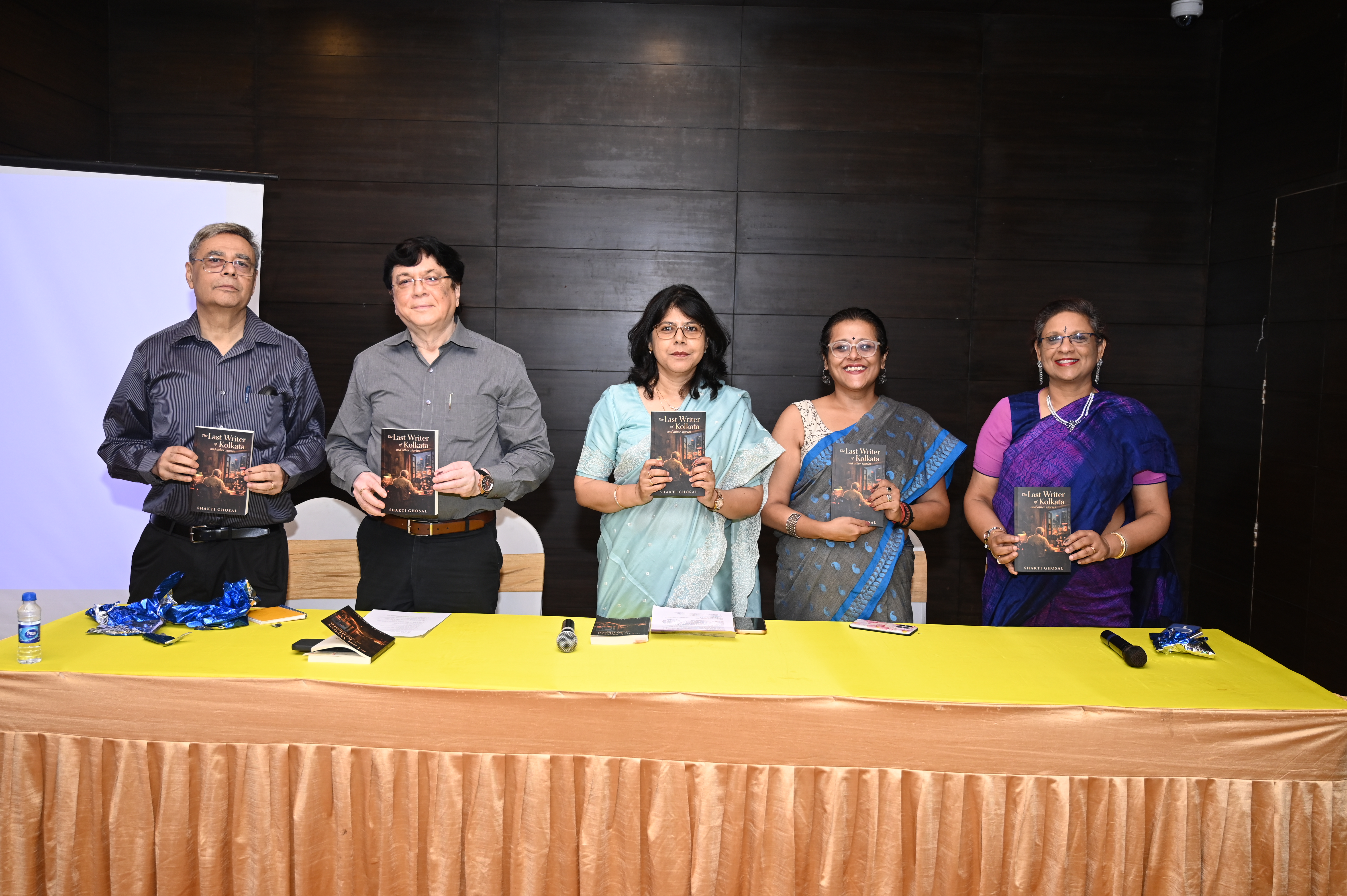
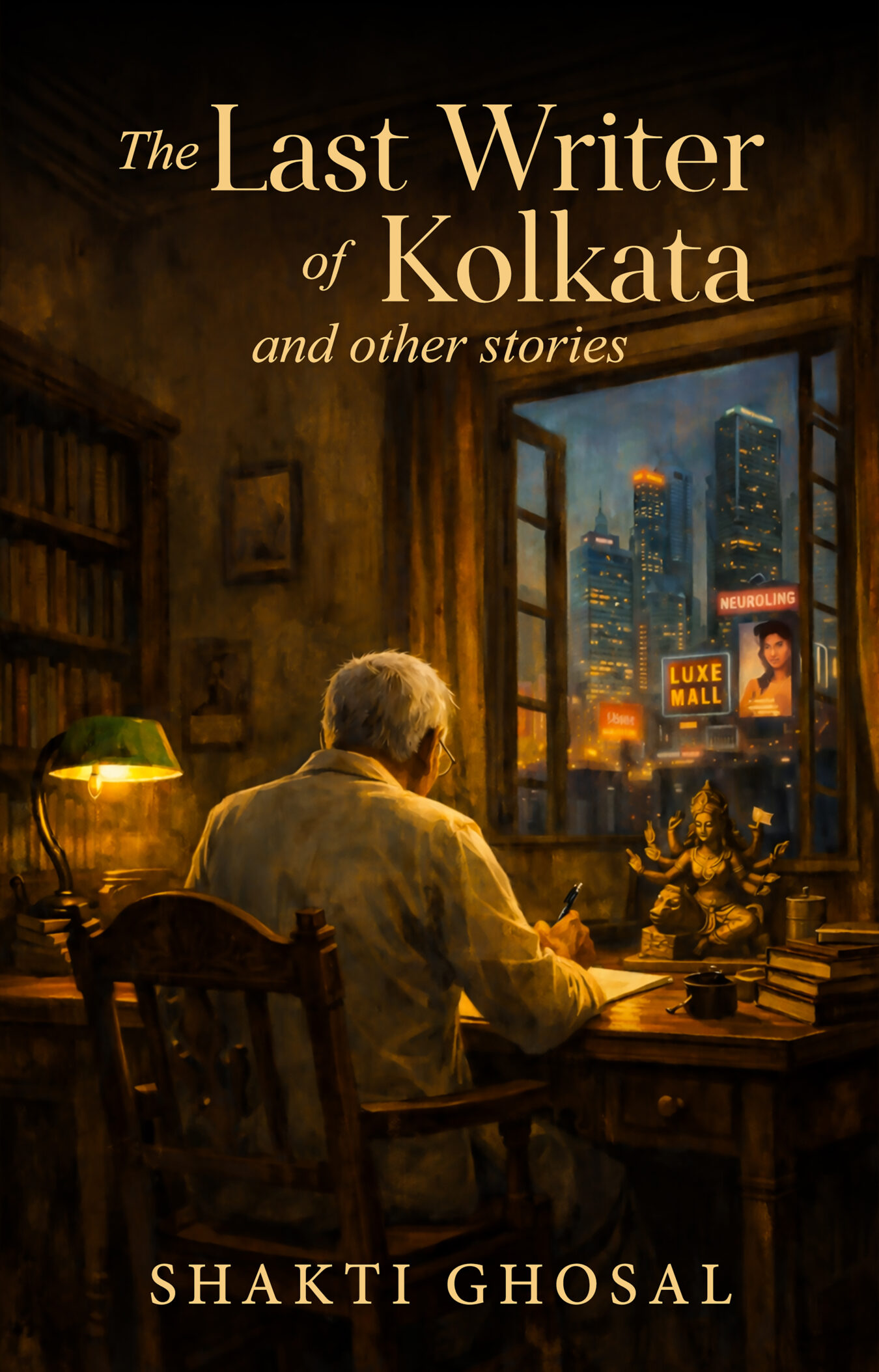
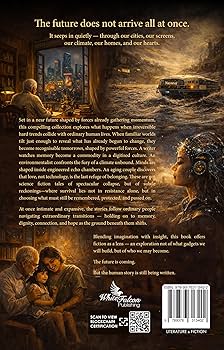
Shakti Ghosal (PGP 1984) has worn many hats over the course of his career—as a corporate leader, educator, mentor and author. His latest book, The Last Writer of Kolkata and Other Stories, marks a departure from his earlier historical fiction, venturing into the realm of speculative fiction to explore questions around artificial intelligence, climate change, leadership, identity and the future of human relationships. Rather than predicting what lies ahead, the collection invites readers to reflect on the choices that will shape tomorrow. In this conversation with LSquare, Ghosal discusses the inspiration behind the book, his evolution as a writer, and why, even in imagined futures, the human story remains at the centre.

Your latest collection, The Last Writer of Kolkata and Other Stories, marks a distinct departure from your earlier works. What sparked the idea for this book, and what drew you towards speculative fiction?
That is indeed so. My previous book, ‘The Chronicler of the Hooghly and Other Stories’, were tales were rooted in the past — drawn from intense, formative experiences in my own life, sometimes intertwined with history and were attempts to understand where I had come from. The present one, ‘The Last Writer of Kolkata and Other stories’ turns its gaze in the opposite direction. The seed for this book was planted while I was teaching an elective course at the Indian Institute of Management Nagpur. As we discussed these visible, irreversible trends, I looked at the Generation Z students sitting in the classroom and found myself imagining the human stories that might unfold for them. These stories emerged from that intersection of analysis and imagination.
For most of my professional life, I have been asking organisations a deceptively simple question: What happens if tomorrow is fundamentally different from today? In more ways than one, that question eventually followed me home. The more I have been observing advances in artificial intelligence, demographic shifts, climate change and the changing nature of human relationships, the more I realise that these are not isolated developments. They are interconnected forces quietly shaping our future.
The book is fictional because stories allow us to explore possibilities without pretending to possess certainty. Fiction lowers our intellectual defences. It allows us to inhabit tomorrow emotionally before we encounter it in reality. Perhaps speculative fiction is not really about predicting the future. It is about preparing us to recognise it when it arrives.
Several stories in the collection are rooted in emerging realities rather than distant fantasies. How did you decide which contemporary ideas or anxieties were worth exploring through fiction?
If truth be said, I was less interested in trends than in trajectories. I suppose anyone can extrapolate technology. The more difficult task is understanding how technology changes people.
While researching the book, I kept returning to what futurists describe as “hard trends”—developments that are already visible and whose direction is becoming increasingly difficult to reverse. Artificial intelligence, ageing populations, ecological stress, algorithmic influence and migration all belong to that category. But I stopped myself from asking, “What technology comes next?” InsteadI asked, “What happens to trust? To memory? To belonging? To identity?”
The stories emerged from those questions. Technology provided the setting. Human behaviour provided the plot.
The title The Last Writer of Kolkata is both evocative and intriguing. Without revealing too much, what does the title signify, and why did you choose it to represent the entire collection?
I suppose titles should invite curiosity rather than explain themselves. The “Last Writer” in that sense is not merely an individual. He represents something larger. In every era there are people who refuse to surrender reflection to convenience, memory to algorithms or culture to commercialisation. Writing, after all, is an act of resistance in many ways. For it demands patience in an impatient world, ambiguity in an age of certainty and reflection in a culture increasingly driven by reaction.
Although the collection spans four very different futures, they are united by one central question: ‘ What do we choose to preserve when everything else is changing?’ For me, that question found its most enduring expression in The Last Writer of Kolkata.
Was there a particular story in the collection that stayed with you long after you finished writing it? What made it especially meaningful or challenging?
Each story challenged me differently, but for me, 2056: The Year of Water and Fire stayed the longest. Perhaps because climate change is unlike many other risks. It unfolds slowly enough to be ignored, yet relentlessly enough to reshape civilisation.
While writing it, I realised I was not really writing about rising seas or violent storms. I was really writing about leadership, a domain I remain passionate about. The story is about communities choosing collaboration over helplessness. But it is also about people discovering resilience before circumstances force it upon them. For me, Resilience remains a foundational core on which Leadership rests.
Looking back, I think the story became less about climate and more about human adaptability. And that, to me, is ultimately a leadership question.
Having written across history, leadership, and now speculative fiction, how has your own journey as a writer evolved? In what ways did this book challenge you creatively?
I find this a great question making me pause and think.
In my younger days and when I worked in organisations, I wrote largely to explain. But when I started writing fiction, I found myself writing to explore. Initially the past and how it possibly reshaped me. With this book now, exploring the future to understand how humanity might cope. This shift, for me, has been immensely liberating.
Management writing often seeks clarity and conclusions. Fiction invites ambiguity. It allows questions to remain open long after the final page. Creatively speaking, the greatest challenge for me was resisting the temptation to become a lecturer. Every time an idea became too explicit, I asked myself whether a character could express it more honestly than an argument.
I suspect I have become less interested in giving readers answers and more interested in helping them ask better questions.
Alongside your work as an author, you teach and mentor at leading management institutions and work closely with business leaders. Did your interactions in classrooms and boardrooms influence the questions or ideas explored in this book?
If I were to respond in one word, I would say profoundly.
Boardrooms and classrooms are both places where people attempt to make sense of uncertainty. Over the years, I noticed that discussions about AI, disruption or digital transformation often focused on capability. But far less time was spent discussing consequence. There were questions that continued to haunt me. Like, what happens to trust when decisions become automated? Or, what becomes of creativity when efficiency dominates? And the important one, can leadership remain deeply human in increasingly algorithmic organisations?
The above and the related conversations quietly entered the stories. In many ways, I see the book is simply another classroom. Only this time, the case studies happen to take place in the future.
While the stories imagine future worlds, they remain deeply rooted in human emotions and relationships. Was it important for you to ensure that the human story remained at the heart of the narrative despite the technological backdrop?
Indeed yes, and if I may add, it was essential.
Technology fascinates us. But people move us. Readers rarely remember a novel because it accurately predicted a gadget. They remember it because they recognised themselves in another human being. Maybe, an ageing widower trying to preserve memory. Or, parents letting go of a daughter. Or, a child searching for belonging. Or, a technologist questioning the very technology he helped create.
Those emotional truths mattered far more to me than technological accuracy. The future may change our tools. But It would never eliminate our longing to love, to belong or to be remembered.
Looking back at the completed manuscript, what aspect of The Last Writer of Kolkata and Other Stories are you most proud of, and what do you think sets it apart from your previous books?
I would say it is possibly the balance.
I wanted readers to encounter serious ideas without feeling they were reading a treatise. If the book succeeds, it would be because the philosophy it speaks of, had arrived through people rather than propositions.
Seeing the reviews on Amazon and Goodreads. I am also pleased that readers have resisted placing it into a single category. Some describe it as speculative fiction. Others call it literary fiction. Still others see it as climate fiction, philosophical fiction or even leadership fiction in disguise.
I take that as a compliment. Life itself rarely fits neatly into categories. Why thus should stories?
If readers were to finish this collection carrying just one thought, one question, or one emotion with them, what would you hope it would be?
I hope they leave with just one quiet but persistent question: ‘As the world changes around us, what within us must never change?’
We often speak about preparing for the future as though it were primarily a technological challenge. I believe it is equally a moral and human one. Machines will undoubtedly become more intelligent. Whether we become wiser remains entirely our choice.
If readers close the book and begin looking at today’s headlines with slightly different eyes, then the stories have already begun doing their work.
Thought-provoking yet deeply human, The Last Writer of Kolkata and Other Stories reflects Shakti Ghosal’s belief that the future is not defined by technology alone, but by the values and choices that guide us through change. As our conversation draws to a close, one message stands out: while the world around us may transform in unexpected ways, our capacity for reflection, empathy and resilience will continue to shape the stories we tell—and the future we create.
