

Alumni Author: What They Don’t Tell You About Marriage – Yashodhara Lal, PGP 2002
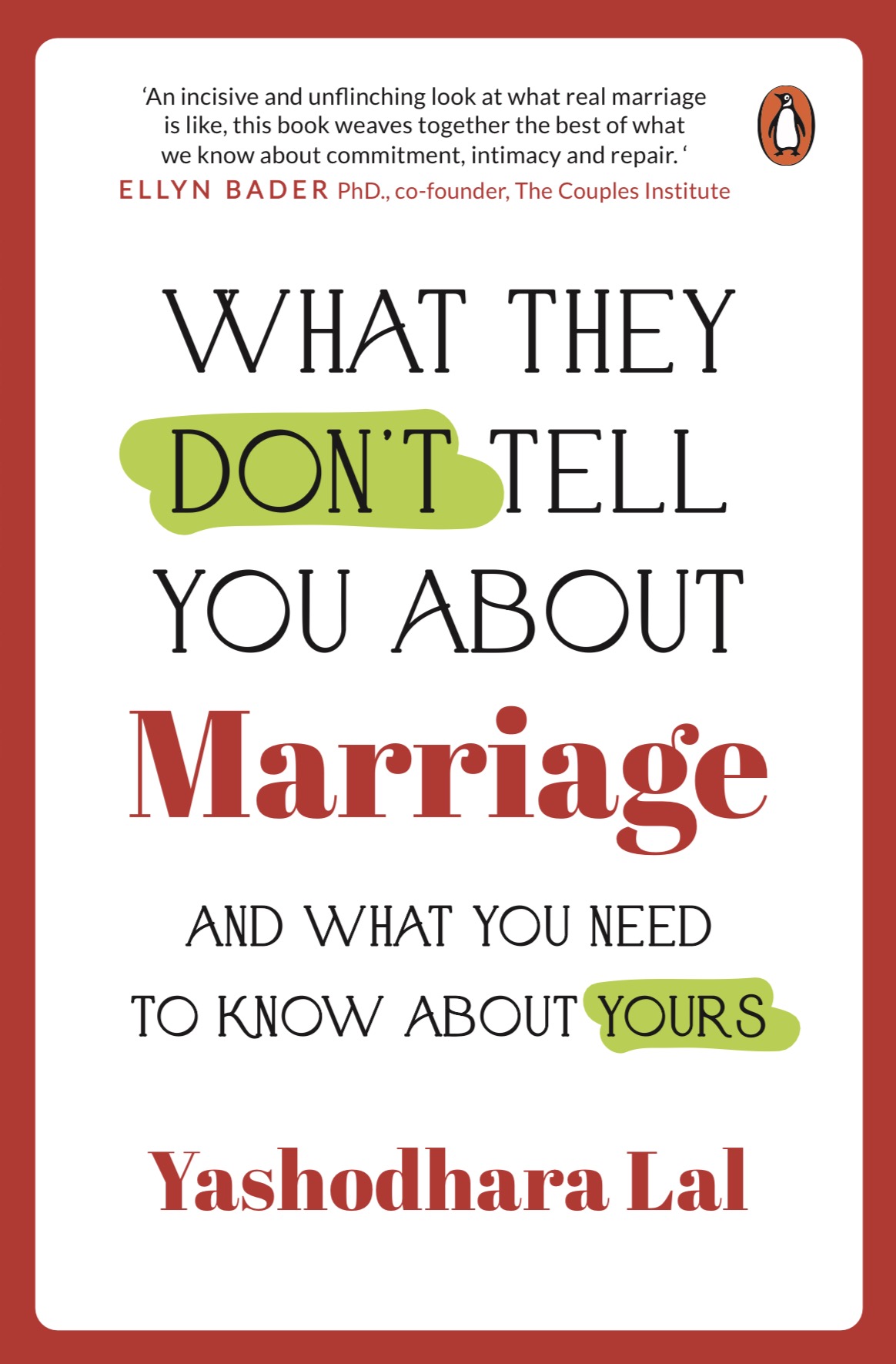
In her tenth book across genres, What They Don’t Tell You About Marriage, Yashodhara Lal (PGP 2002) explores the emotional architecture of long-term partnership. Drawing from years of therapeutic practice and personal experience, the book examines the quiet tensions modern couples navigate—between tradition and autonomy, expectation and acceptance, love and accountability. In this conversation, she reflects on why she chose to write this book now and the relational skills she believes every couple deserves to learn.
What drew you to write What They Don’t Tell You About Marriage at this point in your journey — both personally and professionally?
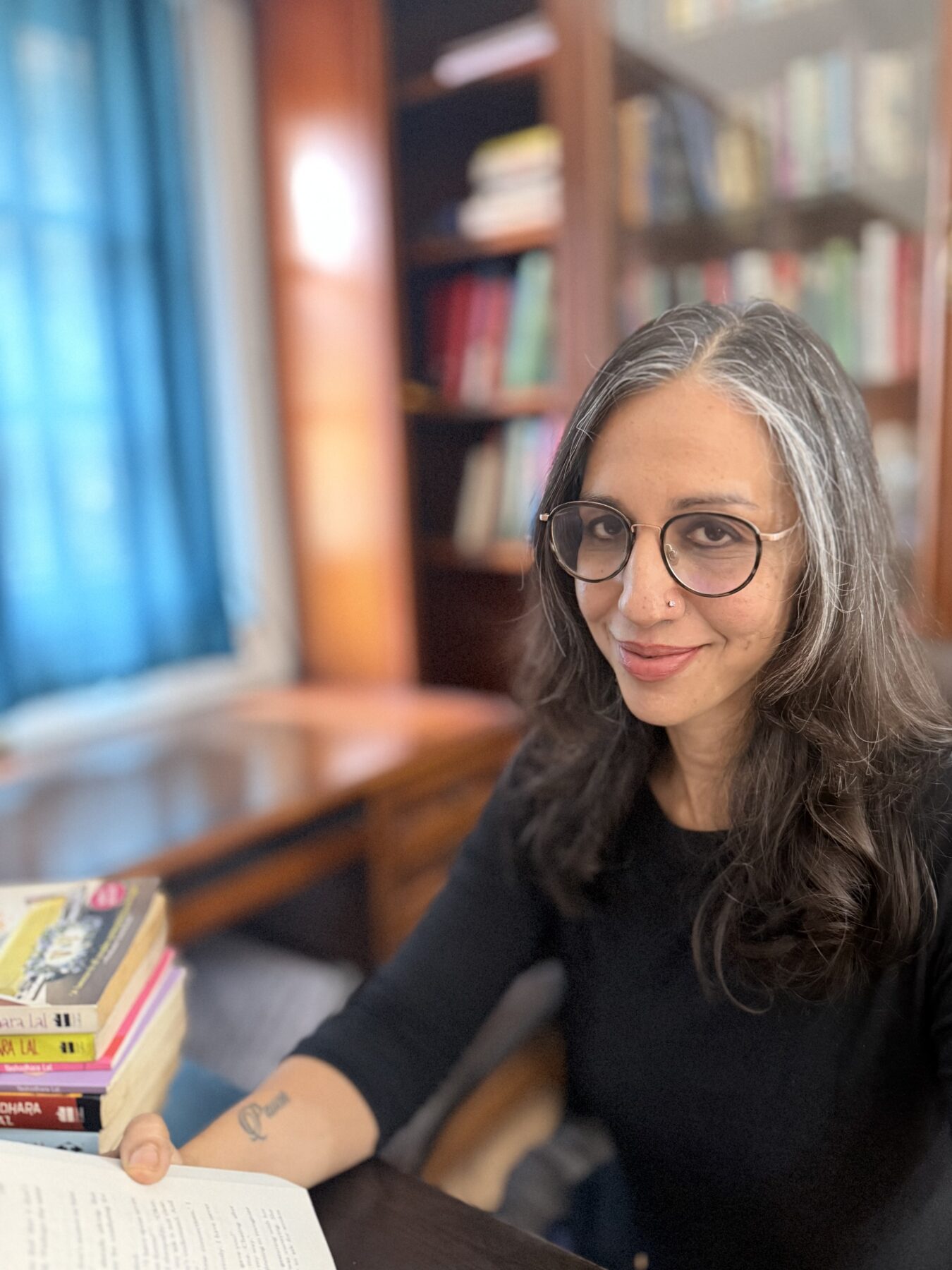
At this stage in my journey, I’ve spent several years working deeply with individuals and couples as a therapist. What has become increasingly clear is that our primary relationship is one of the most powerful determinants of the quality of our lives. Even in individual therapy, people are often talking about their intimate partnerships. In couples therapy, of course, the relationship is central.
At the same time, modern Indian marriages seem to be under particular strain. We are navigating the tension between traditional values that emphasise family, stability and community, and a growing emphasis on individual fulfilment and autonomy — especially as more women now enjoy financial independence. Yet there is surprisingly little accessible guidance available, and relatively few highly trained couples therapists working in this space.
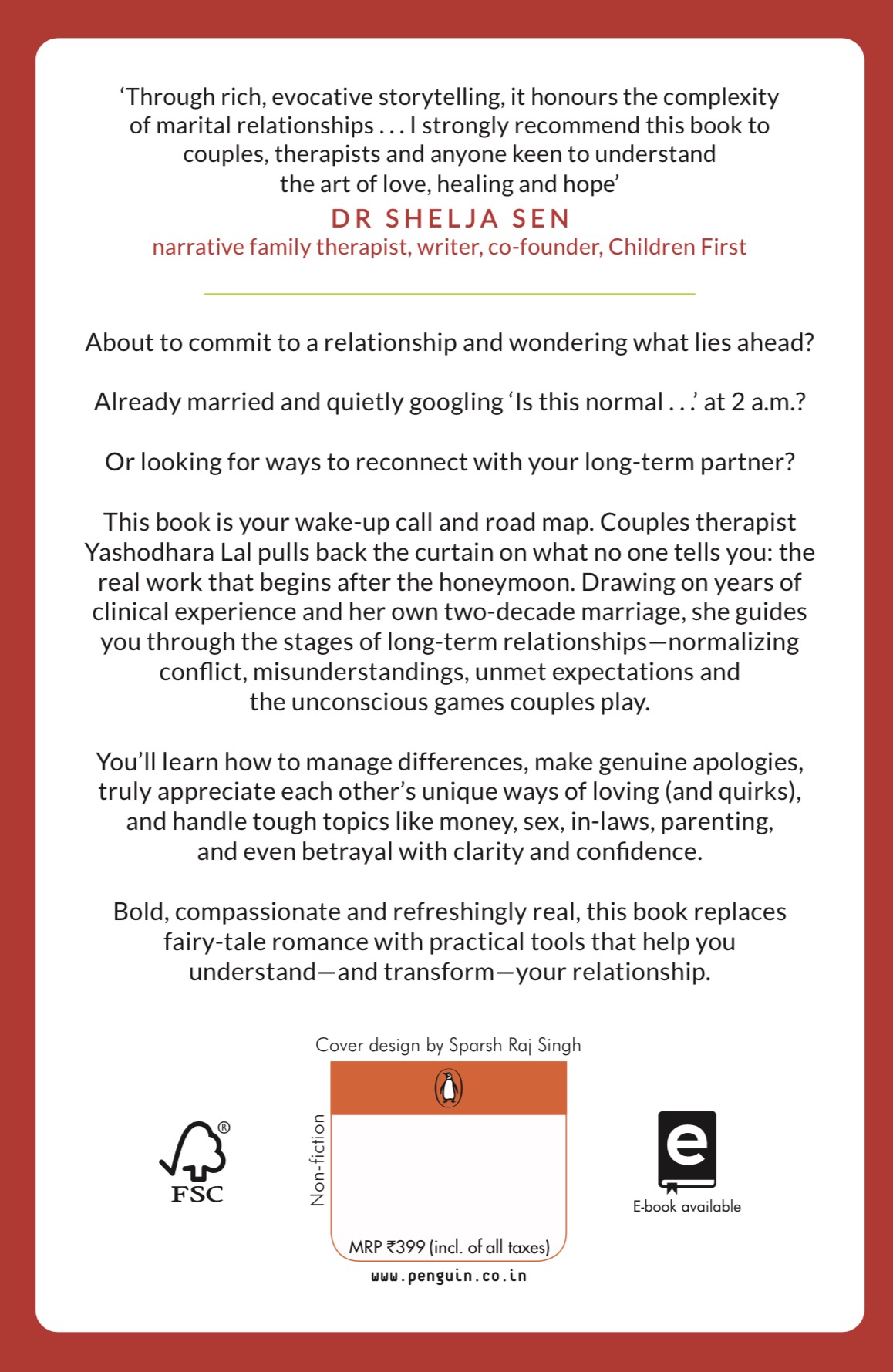
On a personal level, I often find myself wishing that when I first met my husband 25 years ago, I’d had a resource that helped me understand and navigate the inevitable challenges of intimacy. This book brings together my professional learning, my work with modern Indian couples, and my own lived experience of a long-term marriage — with all its highs and lows.
It is for those starting out, for those wondering what changed after the honeymoon phase ended, and for those who have struggled for years. Ultimately, it invites each partner to look at their own side of the street — because that’s where meaningful change begins.
When you began writing this book, who were you imagining as your reader?
Initially, I imagined someone two to five years into marriage — well past the honeymoon glow and now in what therapists call the stage of differentiation. This is when couples must learn to express their differences and tolerate those of their partner. Many get stuck here.
But as I wrote, I realised the book isn’t limited to that stage. Many couples remain caught in the same patterns for years, sometimes re-traumatising each other without realising it. Since couples therapy still carries stigma for many, I hope this book serves as an accessible entry point.
It can also be a wonderful wedding gift — a primer that prepares couples for the realities of living together. Prevention, after all, is better than cure. In that sense, it’s relevant not only to those struggling, but also to those contemplating long-term commitment. So while the sweet spot might be someone a few years into their marriage, this book can add value to anyone at any stage as long as they are willing to grow in their relationship.
Was there a particular insight from your therapy practice that stayed with you long enough to become a chapter?
There are many, but one that stands out is how much couples struggle with apologies.
Most of us were taught to “just say sorry,” whether we meant it or not. But apology is a relational process, not a social formality. In fact, Dr John Gottman describes repair as perhaps the most essential skill couples must learn.
I’ve witnessed moments where one partner casually says, “My bad,” believing the issue is settled, while the other is still waiting for a real apology. A meaningful apology requires recognising the hurt caused, taking responsibility, understanding the impact, expressing genuine remorse, and committing to change. And yes, the actual words ‘I’m sorry’ make a difference as part of an effective apology.
It sounds simple — but it isn’t. And we are rarely taught how to do it well. That recurring moment in therapy became a full chapter, and it’s just one example of the many relational skills we were never formally taught.
How did writing this book differ emotionally from writing your earlier fiction?
Fiction is, in some ways, safer. Even when we draw from our own lives, there’s a layer of disguise.
In this book, while all client material is carefully anonymised and amalgamated, I’ve also drawn substantially from my own 23-year marriage. That vulnerability carries risk. I don’t take for granted that my husband has supported me in sharing parts of our journey – it’s something I’m deeply grateful to him for.
Unlike my earlier memoir work, which leaned heavily on humour, this book carries more gravitas. While there are light touches, humour cannot fully cushion the emotional exposure. It demanded greater honesty — and greater courage.
In the process of writing, did you find yourself revisiting your own relationship with fresh eyes?
Very much so.
Writing helps me refine my thinking — about my work and about myself. Putting experiences on paper often brings clarity that reflection alone does not.
For example, I recount an incident where my husband once sped up to cross the path of a black cat before I did — symbolically “taking the bad luck” upon himself. At the time, I rolled my eyes. But writing about it as an example of love languages helped me fully appreciate the tenderness behind the gesture.
Strong relationships grow when we train ourselves to notice the positive, while learning to make sense of and manage the negative more constructively. I do believe the process of writing this book has strengthened my own marriage further.
You transitioned from a corporate career to writing and therapy over time. Looking back, what made that shift feel possible?
Well, for one thing, at the time, it felt less like a possibility and more like a necessity.
After nearly two decades in corporate leadership, I realised that while I had learned a great deal, something essential was missing — creativity and meaningful work with people. I wasn’t enjoying myself, and that affected who I was becoming.
What made the shift possible was support — especially from my husband. Whenever I spoke of quitting, his response was unwavering: “Go explore. I’ve got you.” That kind of partnership makes courage possible.
I had also begun exploring coaching and Transactional Analysis while still in corporate life. By following my curiosity and trusting my instincts, the transition gradually unfolded. And today, when I look back, I realise how much my corporate career has helped me develop my financial freedom, confidence, network, and leadership capabilities—and a couple’s therapist really needs to be a leader in the room!
While writing this book, were there moments when you had to pause—either because the subject felt deeply personal or because it demanded greater honesty than you expected?
The writing process for me is continuous — I’m always observing, reflecting and making notes. When I sit down to write a first draft, it tends to come in an intense burst of energy.
Yes, the subject is deeply personal and it demanded honesty. But rather than making me pause, that honesty felt integral to the work. Vulnerability was not an obstacle — it was part of the offering.
What kind of conversations do you hope this book sparks between partners that might otherwise remain unspoken?
I hope it normalises conversations around topics every couple must eventually face: money, sex, parenting, in-laws, division of responsibilities and conflict resolution.
I also hope it opens dialogue around repair, apology, family-of-origin stories, expectations and accountability. A major theme of the book is shifting from blaming one’s partner to taking responsibility for one’s own growth.
If couples can approach these topics with better tools and greater empathy, these important conversations become less threatening — and far more transformative.
If you could gently dispel one quiet myth about marriage through this book, what would it be?
The myth that “it should be easy with the right person.”
I often hear, “This isn’t who I married,” or “Why is it so difficult with this person?” The hidden assumption is that your partner should fit you perfectly.
But intimate relationships are inherently triggering. We unconsciously choose partners who activate our deepest childhood patterns. We bring high expectations, live in close proximity, and often underestimate how difficult we ourselves can be.
Marriage requires effort — but that is not a despairing message. Growth always requires work. And the beauty that emerges from shared effort can be deeper and more meaningful than anything effortless.
When you reflect on your journey — as a professional, a partner, and now a therapist — is there anything you would approach differently if you were starting again today?
Like everyone, I have regrets. And as a therapist, I’ve learned that regret contains valuable information about how we might live differently.
I might have left the corporate world a few years earlier. I might have done my own personal work sooner and recognised how my perfectionism affected both myself and others. I might have been less quick to blame in my marriage.
But I also believe in reframing. The struggles I’ve experienced — personally and professionally — gave me the depth and motivation to become the therapist and writer I am today. Without those challenges, this book may not have existed.
Regret can point us toward a better future. Acceptance helps us live well in the present. I hope this book offers readers both — perspective and possibility.
This conversation underscores a powerful truth: strong relationships are not accidental—they are intentional. The book serves as both a mirror and a manual, encouraging partners to examine their own patterns while building healthier ways of relating. Grounded, practical, and deeply reflective, it offers readers not easy answers, but better questions—the kind that can transform how two people grow together over time.
