

Alumni Ventures: Taraltec Solutions Pvt Ltd—Anjan Mukherjee, PGP 1989
Anjan Mukherjee’s journey reflects a willingness to step away from the expected path to pursue what truly mattered to him. An alumnus of IIM Bangalore (PGP 1989), he began his academic journey at IIT Bombay before opting out to pursue marine engineering at DMET, Kolkata—a decision that shaped both his worldview and his problem-solving approach.
Today, as the founder of Taraltec Solutions Pvt Ltd, Anjan works at the intersection of engineering and social need, developing practical solutions to make contaminated water safer and more accessible for communities where clean water remains uncertain.
To begin with, could you tell us a little about yourself and the work you’re currently engaged in?
I am a marine engineer by training and an alumnus of IIM Bangalore. I started at IIT Bombay but chose to opt out after two years to pursue marine engineering at DMET, Kolkata—an early decision that reinforced the value of learning that is closely tied to real-world application rather than following a prescribed path.
Over the years, my interests have gravitated towards engineering problems with direct human consequences. Through Taraltec, my current work focuses on developing practical, science-backed approaches to treat contaminated water, with an emphasis on solutions that can perform consistently across varied and unpredictable operating environments.
What led you to start Taraltec?
The idea for Taraltec emerged gradually rather than from a single defining moment. While working in industrial and marine environments, I saw firsthand how widespread and persistent water contamination was, and how difficult it was to address using conventional methods. Many existing solutions were either too complex or too expensive to deploy at scale. I became interested in whether principles observed in nature and physics could be applied differently, and over time that exploration evolved into Taraltec.
For someone unfamiliar with the space, how would you describe Taraltec’s approach to water treatment?
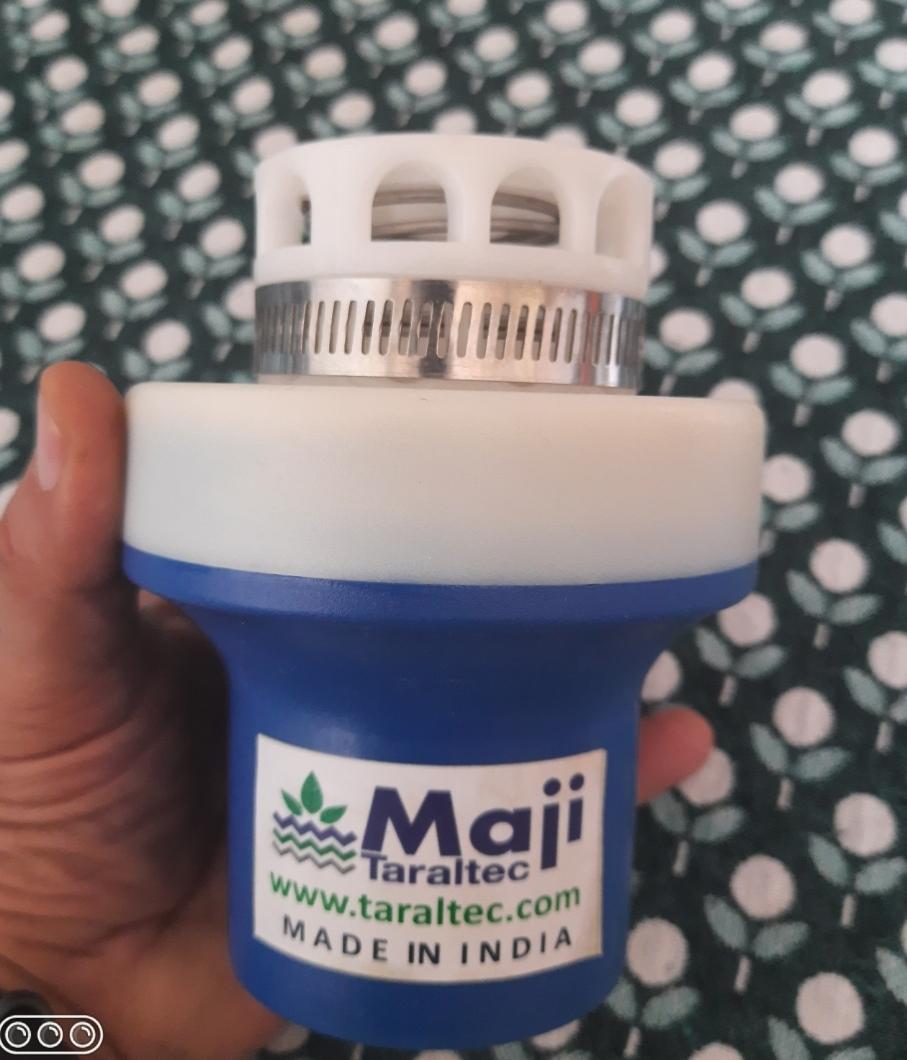
At a very basic level, Taraltec focuses on effectively and practically disinfecting contaminated water. The idea is to address the problem at the source rather than rely on chemical-heavy processes or complex infrastructure. Our approach aims to simplify treatment while ensuring safety, so that clean water becomes easier to access in real-world settings rather than remaining an ideal solution on paper.
Building solutions in sectors like water and infrastructure often takes time. What were some of the early challenges you encountered?
One of the earliest challenges was building credibility for a new approach. In areas that affect public health and safety, skepticism is natural. Demonstrating reliability required patience, pilot deployments, and consistent on-ground results. There were also regulatory and operational hurdles, which needed careful navigation. Progress came gradually through persistence and proof, rather than quick wins.
How did your academic background shape the way you approached building the venture?
My engineering education helped me stay grounded in fundamentals—understanding systems, constraints, and trade-offs. My time at IIM Bangalore added a broader perspective, helping me think about scale, stakeholders, and long-term viability. The emphasis on structured thinking and rigorous evaluation influenced the way I approach decisions, not just from a technical standpoint, but also in terms of impact and sustainability.
What has this journey taught you about leadership and responsibility?
Leadership, for me, has been about patience and responsibility. When you work on problems that directly affect communities, decisions carry weight. I’ve learned that listening—to team members, partners, and realities on the ground—is as important as technical insight. Leadership is also about staying committed during slow phases and keeping the larger purpose in focus, especially when progress feels incremental.

What has been most rewarding for you personally in this journey so far?
The most rewarding moments are those where the impact is visible. When you see contaminated water being treated effectively or hear about communities benefiting from safer water, it reinforces why the effort matters. Those moments bring a sense of quiet satisfaction that goes beyond milestones or recognition.
Sustainability-driven work often requires long-term commitment. What helps you stay grounded during difficult phases?
A clear sense of purpose. Water is fundamental to life, and ensuring its safety is essential. Keeping that perspective helps during periods when progress feels slow or when obstacles seem repetitive. It also helps to remember that meaningful change often happens incrementally rather than all at once.
What advice would you offer to students and alumni interested in building ventures with social or environmental impact?
Be deeply committed to the problem you are trying to solve. Impact-driven work takes time, and results may not be immediately visible. Patience, persistence, and clarity of purpose matter greatly. It’s equally important to remain open to learning—both from setbacks and from people working closely on the ground.
At its core, Anjan’s story is about staying with a problem long enough to make a difference. His work at Taraltec reflects a thoughtful approach to leadership—one that values patience, responsibility, and the quiet satisfaction of creating impact where it matters most.
