

Events@IIMB
IIM Bangalore Hosts Global EFMD Symposium on the Future of Management Education
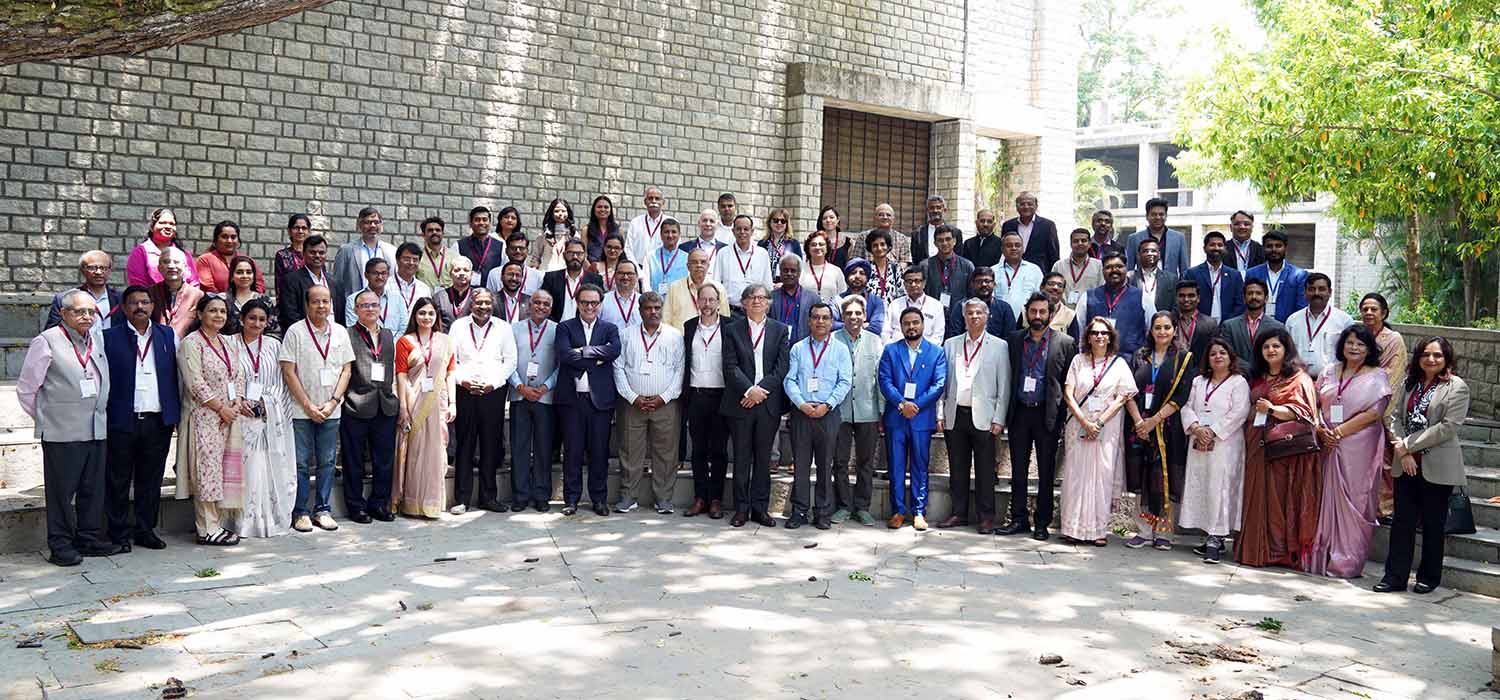
IIM Bangalore, in partnership with EFMD Global, hosted the third edition of the EFMD Symposium in India on 30 April 2026, bringing together academic leaders, industry experts, and institutional decision-makers to discuss the future of management education. Centred on the theme, “Transformation through Accreditation: Leveraging Internationalisation, Technology and Research,” the symposium explored how business schools can respond to rapid technological and societal change.
A key highlight was a panel on Artificial Intelligence in Management Education, moderated by Prof. Rishikesha T. Krishnan, featuring experts from academia and industry. Discussions focused on reimagining learning outcomes, faculty roles, and institutional strategies in an AI-enabled world. Speakers emphasized the importance of balancing technological advancement with human judgement, ethics, and critical thinking.
The symposium underscored accreditation as a catalyst for institutional transformation and highlighted the growing role of international collaboration, research excellence, and technology in shaping the future of management education.
HRIC 2026 Explores Sustainable HR in an Age of Disruption
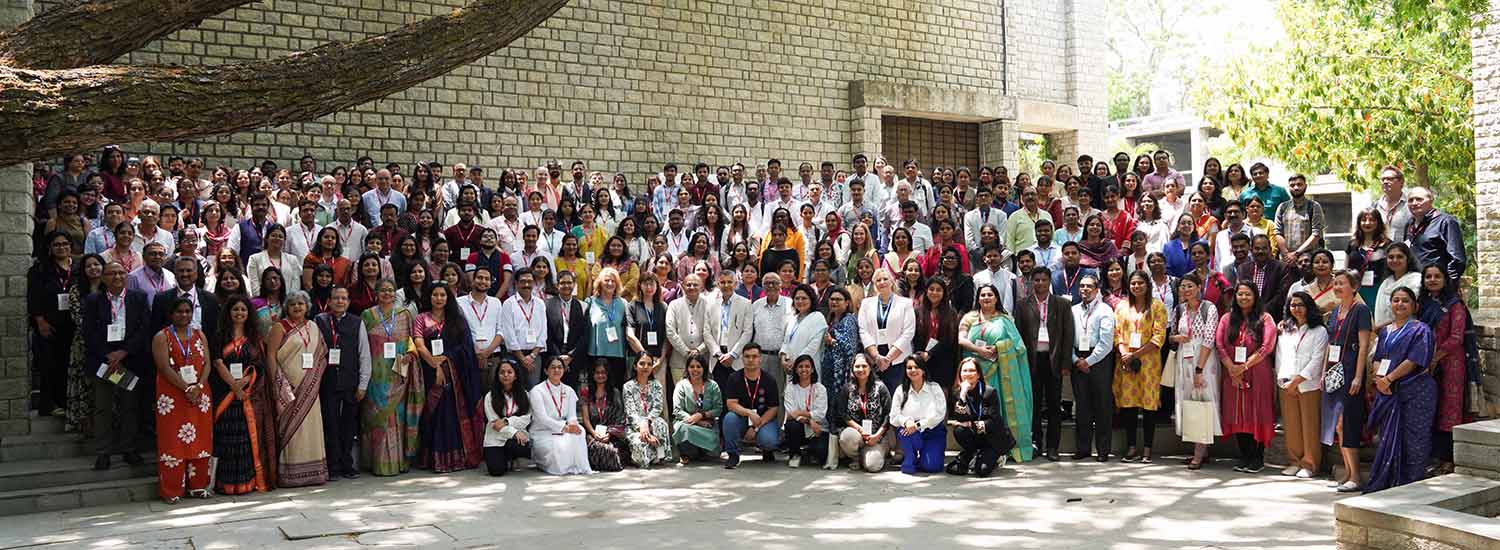
IIM Bangalore hosted the sixth Human Resources International Conference (HRIC 2026) from 9–11 April 2026, bringing together leading scholars, practitioners, doctoral researchers, and industry leaders from around the world. Organised by the Human Resources Division of the Academy of Management, the conference focused on the theme “Sustainable Human Resource Management in the Age of Disruption.”
The event featured keynote addresses from industry leaders including Saugata Gupta, Managing Director and CEO of Marico Limited, and Swapna Bapat, MD and VP – India and SAARC at Palo Alto Networks. Discussions examined how organisations can navigate technological transformation, build resilient talent strategies, and balance productivity with employee wellbeing.
With over 400 research presentations, panel discussions, workshops, and doctoral sessions, HRIC 2026 provided a platform for advancing conversations on AI, the future of work, diversity, sustainability, and leadership. The conference reinforced IIM Bangalore’s role as a hub for cutting-edge management research and thought leadership.
IIMBx Advances Public Sector Learning Through iGOT Karmayogi
IIM Bangalore, through its digital learning initiative IIMBx, continues to contribute to India’s public sector capacity-building efforts through the iGOT Karmayogi platform. Developed under Mission Karmayogi, the national digital learning platform aims to provide accessible, technology-enabled learning opportunities to over two crore government officials across the country.
IIMBx currently offers 11 courses on the platform, covering areas such as communication, leadership, public policy, and governance. Among the most widely accessible offerings is Effective Communication, available in multiple Indian languages to support inclusive learning. Other courses include Leadership Lessons from the Bhagavad Gita, Fundamentals of Public Policy, and Indian Knowledge System: Perspectives on Public Administration.
By combining academic rigour with practical relevance, these courses help public servants strengthen professional competencies and improve governance outcomes. The initiative reflects IIM Bangalore’s commitment to expanding access to high-quality education and supporting nation-building through digital learning.
IIMB Seminar Explores AI, Copyright and Academic Integrity
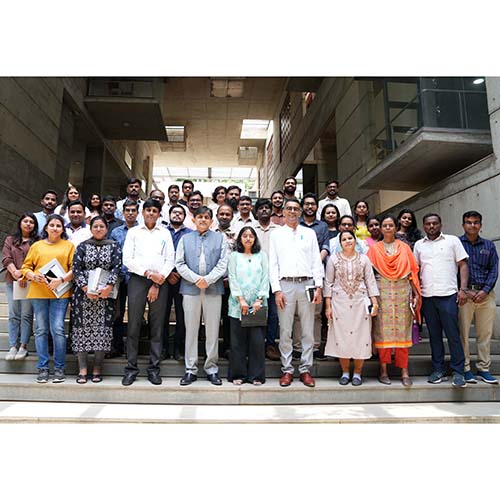
To mark World Book and Copyright Day, the IIM Bangalore Library hosted a seminar on “AI in Research and Writing: Copyright and Ethical Implications” featuring Prof. Anil B. Suraj, legal expert on intellectual property rights and Professor of Practice in Public Policy at IIMB.
The seminar examined the growing role of artificial intelligence in academic research and writing, while highlighting concerns related to originality, copyright, academic integrity, and equitable access. Prof. Suraj discussed both the opportunities and limitations of AI, noting its usefulness in literature reviews, data analysis, language support, and research assistance, while cautioning against overreliance on AI-generated outputs.
He encouraged researchers to value scholarship, creativity, and independent thinking, and called on universities to develop honour codes and ethical frameworks for AI use. The session also explored questions around copyright ownership, fair use, and the evolving legal status of AI-generated content in research and education.
