

IIMBue 2026 – Changing the Orbit
Two days of conversations on leadership, enterprise, technology, purpose and the forces reshaping India and the world
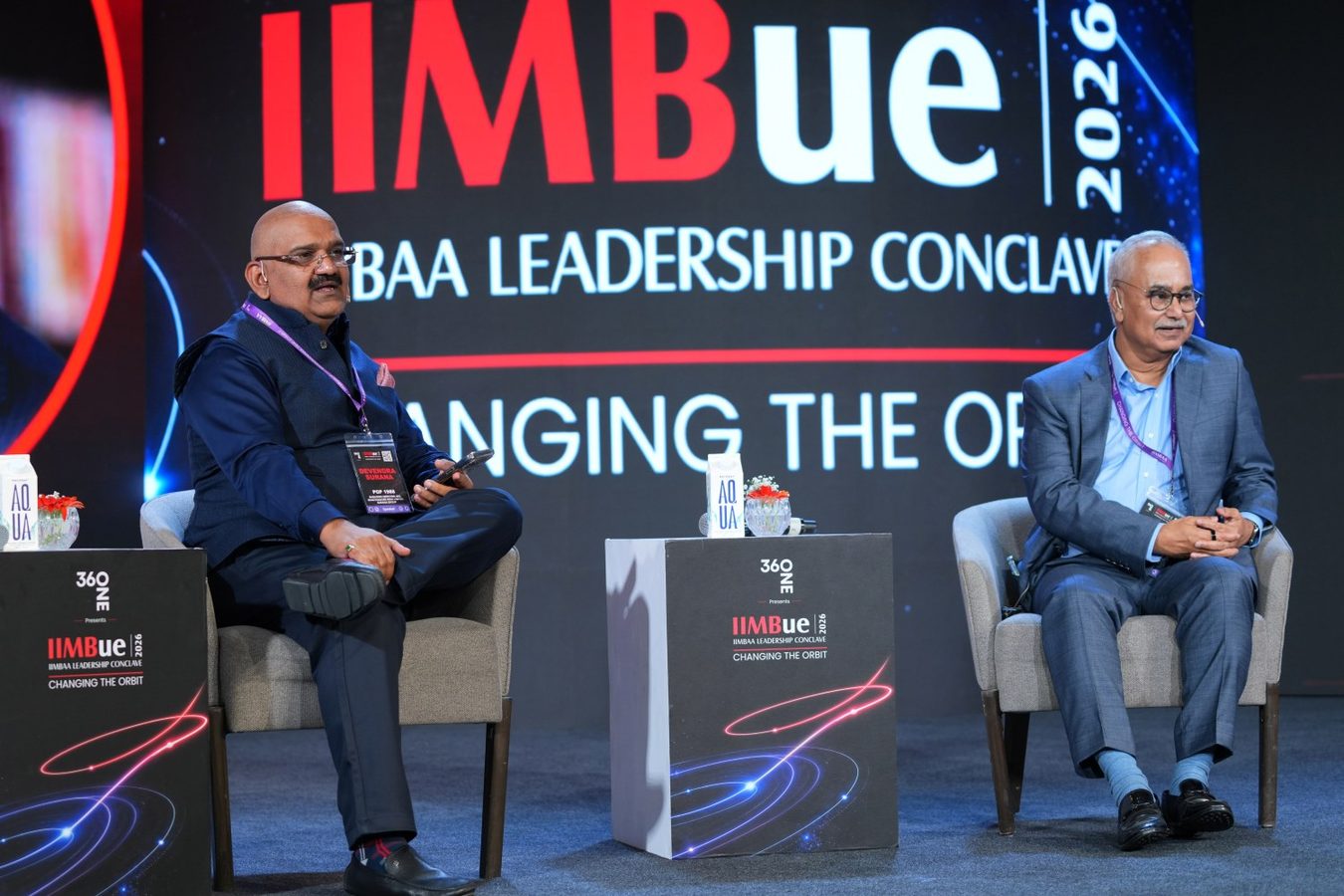
More than 1,500 delegates gathered at IIM Bangalore on 1 and 2 August for IIMBue 2026, the annual leadership conclave organised by the IIM Bangalore Alumni Association. Themed Changing the Orbit, the two-day conclave brought together IIMB alumni, policymakers, business leaders, entrepreneurs, academics, industry experts and public figures for conversations that moved across business and society, technology and geopolitics, institutions and individual journeys.
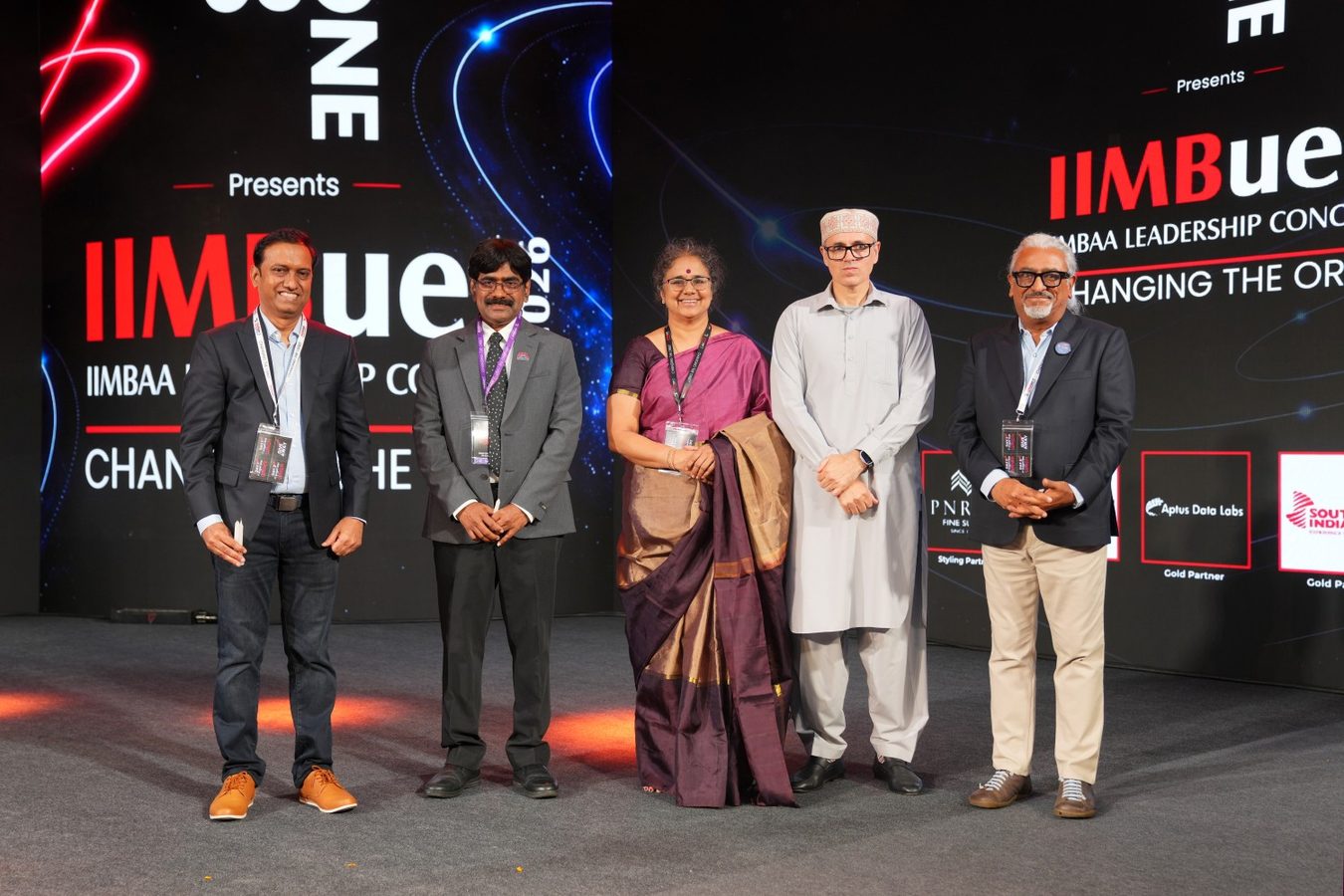
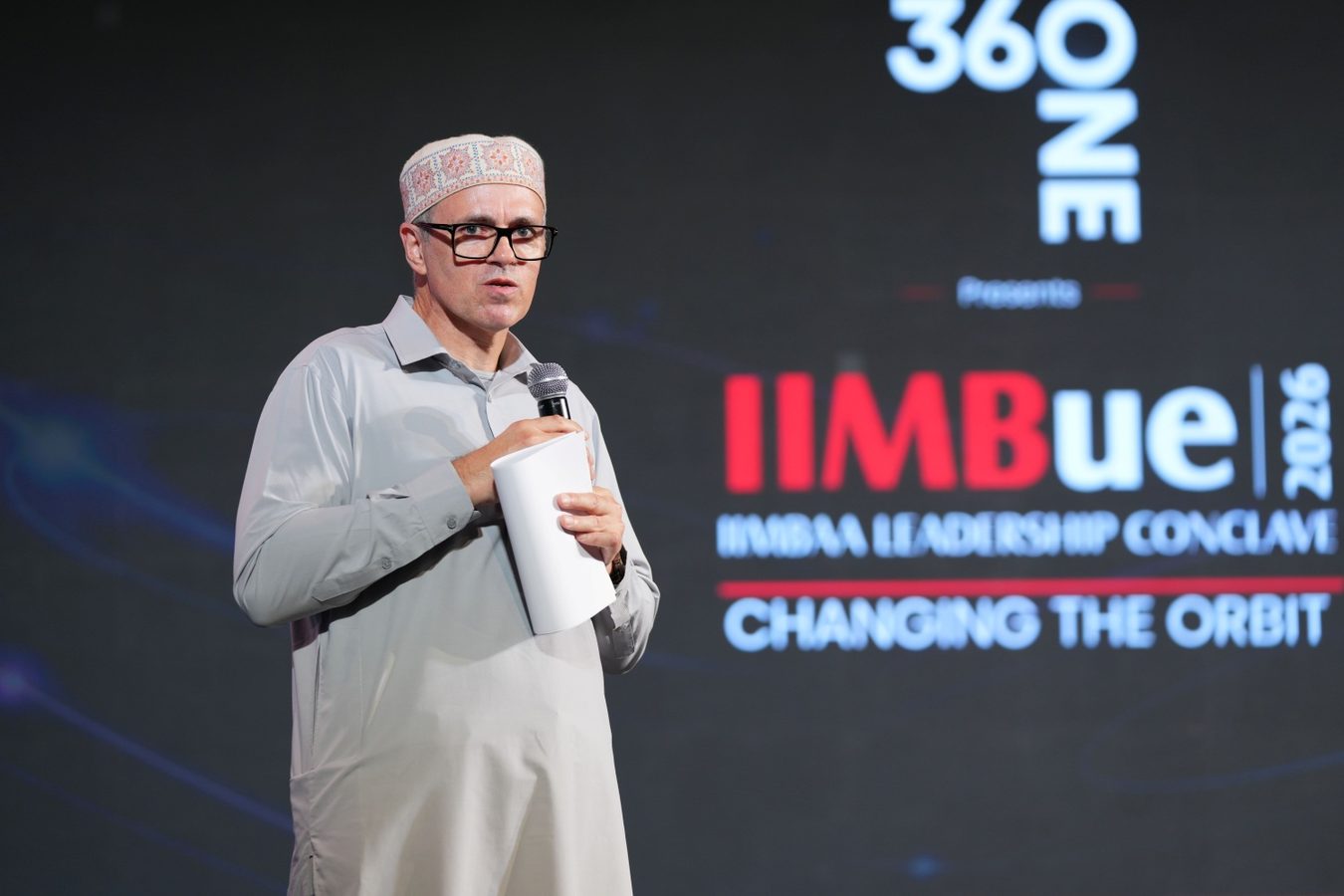
The theme found its first expression in the inaugural keynote by Omar Abdullah, Chief Minister of Jammu & Kashmir, who spoke of the role of institutions and enterprise in changing the long-term trajectory of societies. Drawing from Jammu & Kashmir’s experience, he called for greater attention to institution-building, resilience, market access and connectivity, while urging business leaders to look beyond traditional investment destinations. For mountain economies, he argued, specialisation and quality can be more meaningful than scale.
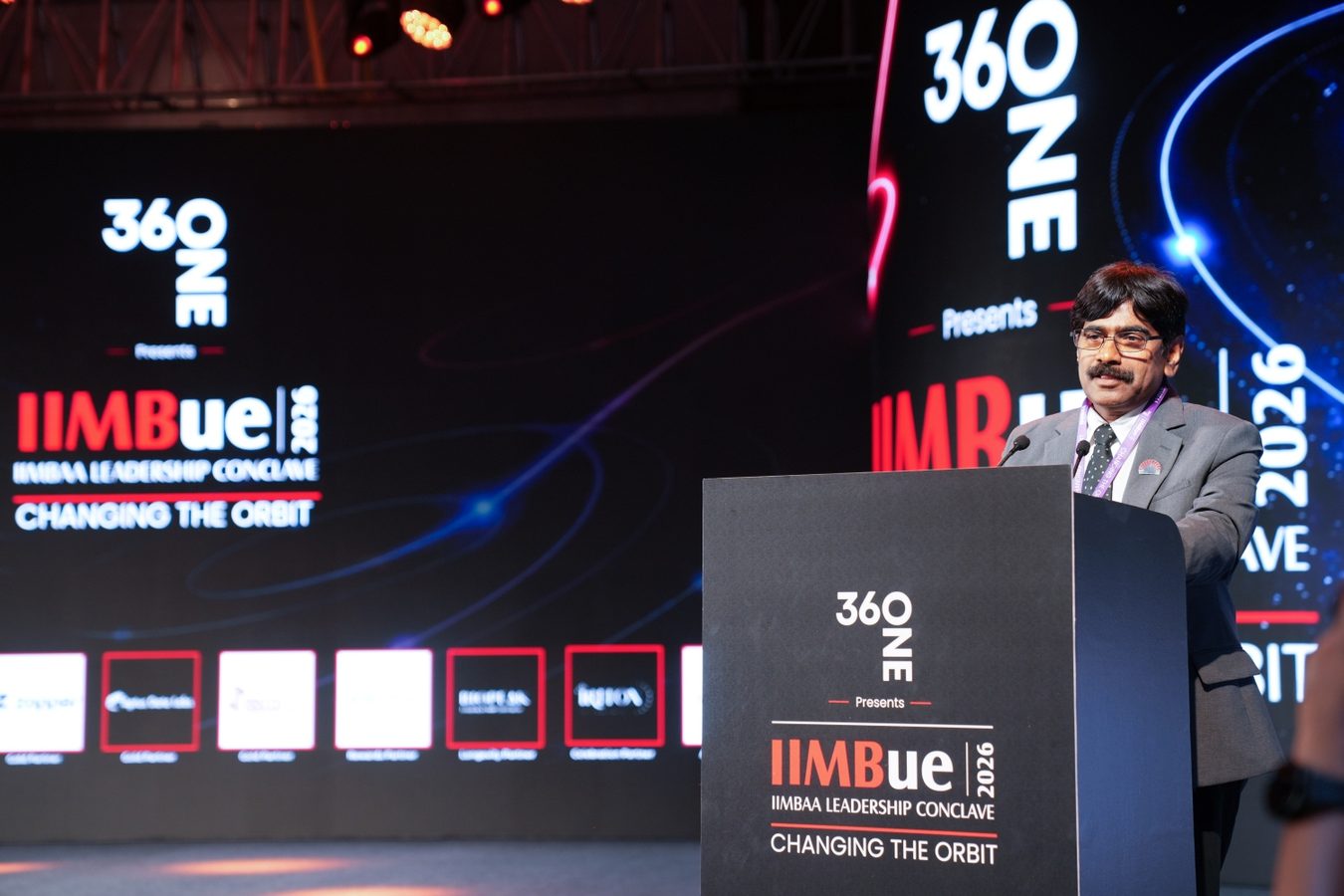
The morning began with a welcome from Prof. U Dinesh Kumar, Director-in-charge, IIMB, who offered alumni a glimpse of an Institute that continues to evolve. From the new undergraduate programmes, with “17-year-olds now on campus”, to the new campus supported by the Tata Trusts and plans for IIMB’s international presence in Indonesia, his address highlighted an institution looking well beyond its traditional boundaries. He also spoke of IIMB’s continuing commitment to nation building, impact and a renewed engagement with its alumni community.
Capital, growth and a changing business landscape
The first day moved quickly from institution-building to the movement of capital across borders. In Bridging Capital, Building Futures: The India-Japan Story, Sundeep Sikka, Managing Director & CEO, Nippon Life India Asset Management, spoke with Prof. Chetan Subramanian of IIMB about what India could learn from Japan’s long-term approach to business and savings.
Sikka’s message was characteristically straightforward: India brings scale and flexibility, while Japan offers lessons in discipline and long-term thinking. “Boring” may not sound like the most exciting prescription for business, but his argument was that sustainable growth, trust and culture compound over time.
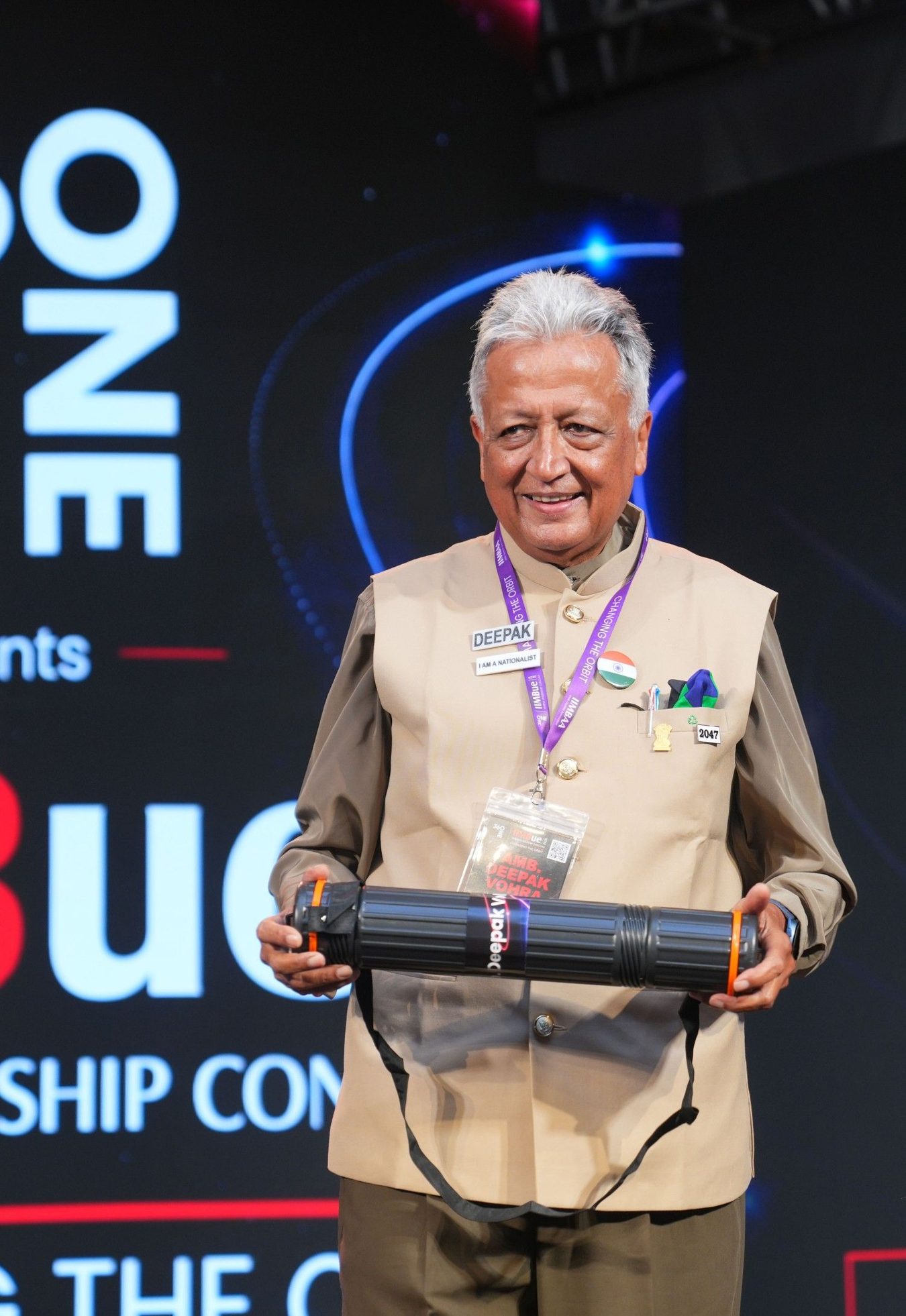
The changing global order was examined from another perspective by Ambassador Deepak Vohra, whose special address, The Gravity Shift: Leadership in a Multipolar World, made the case for a confident India. His presentation ranged from India’s demographic dividend and digital public infrastructure to defence, diplomacy and the idea of Shrestha Bharat, punctuated by popular Bollywood tracks.
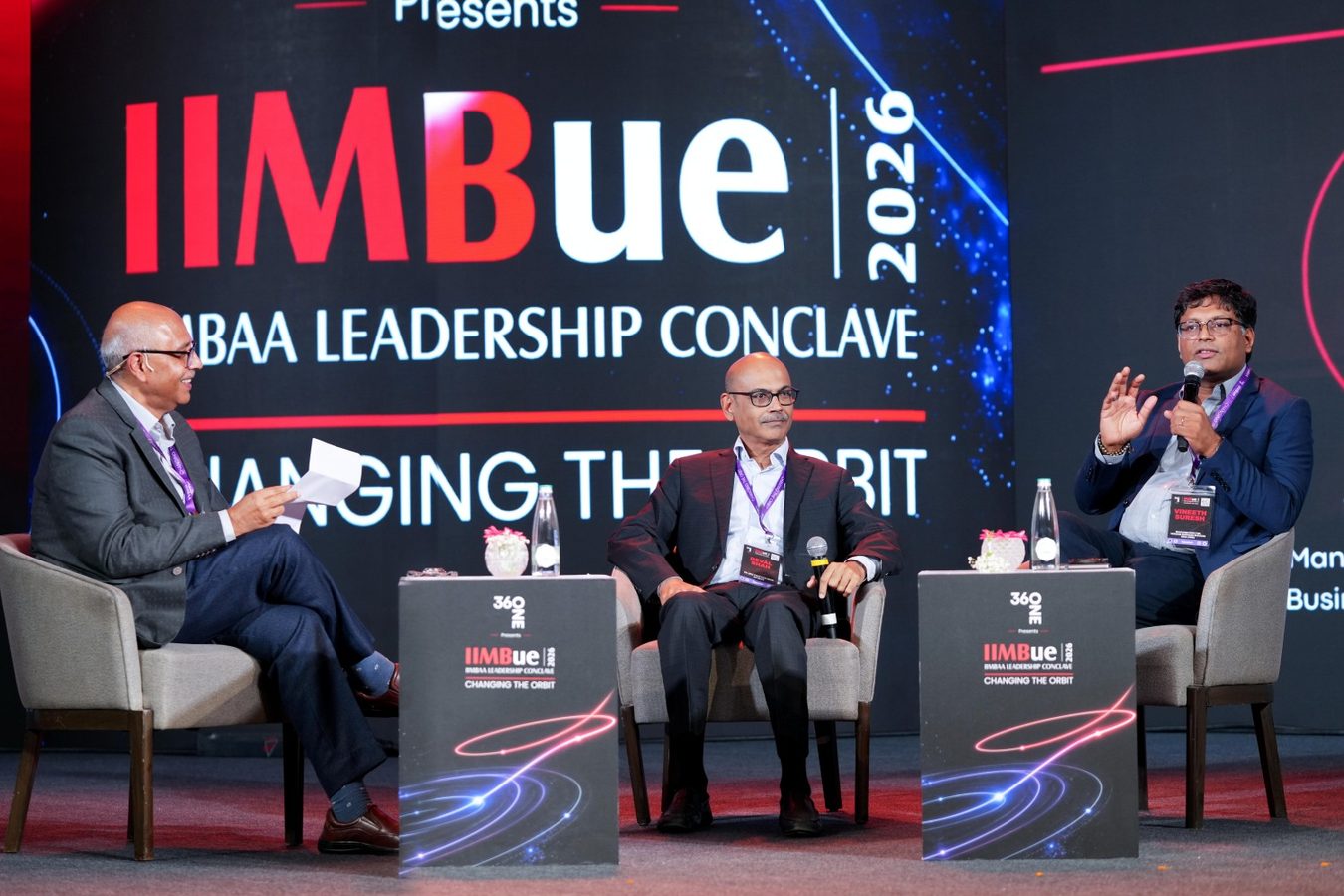
Technology was, unsurprisingly, another major theme. A panel on Rewiring the System in the Era of AI Flares explored how Global Capability Centres are being reshaped by rapid advances in artificial intelligence. The discussion went beyond the adoption of new tools to questions of talent, governance, domain expertise and accountability. The panellists argued that GCCs must evolve from operational centres into innovation and transformation hubs, while developing people who understand their sectors deeply enough to question what AI produces rather than simply accept it.
From campus projects to changing lives
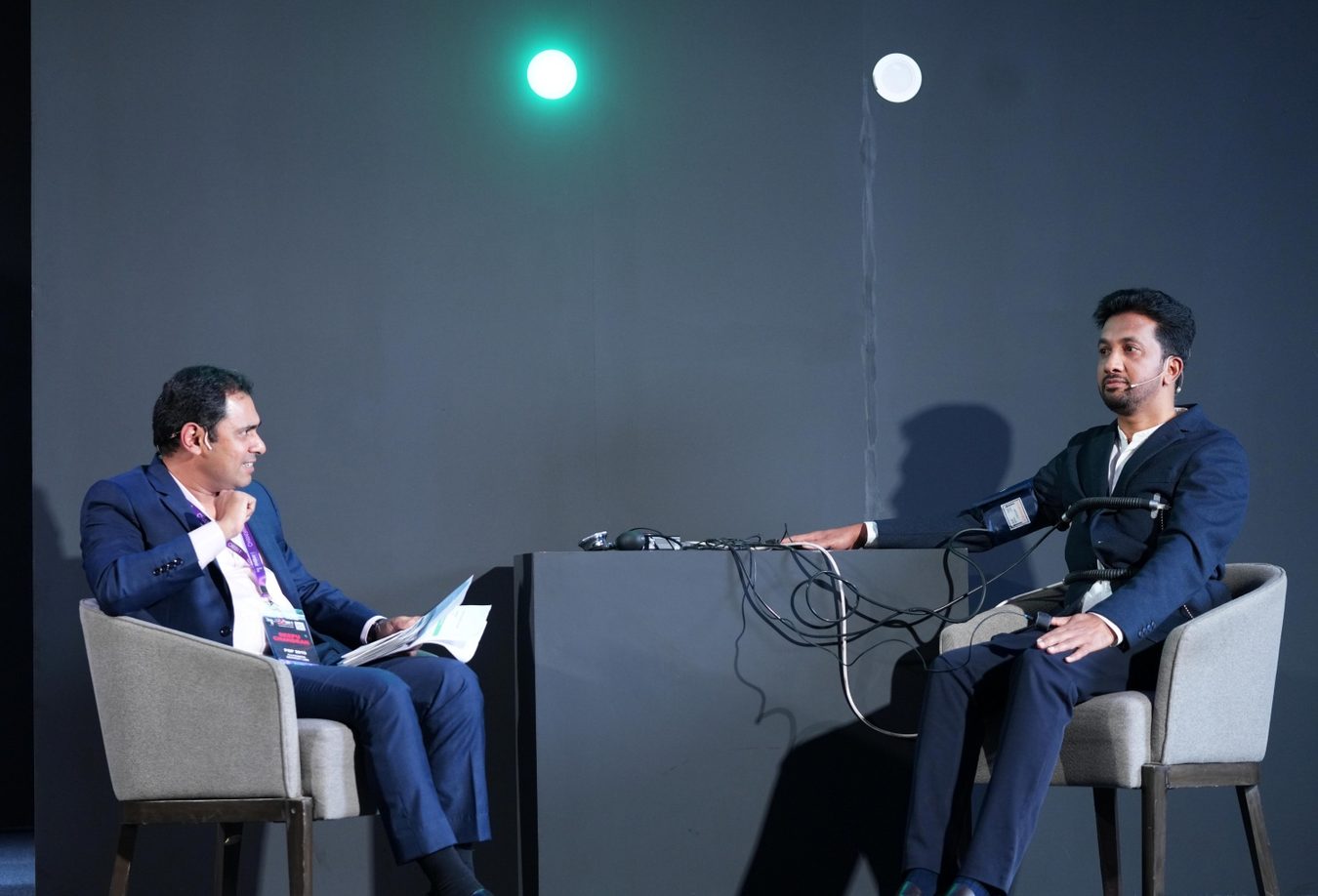
One of the most entertaining conversations of Day 1 came from PC Musthafa, PGSEM ’07, Chairman & Global CEO, iD Fresh Food, in Truth or Beat. Recounting the early days of a business that began as a campus project, Musthafa recalled everything from exploding batter packets to the challenge of building a food brand around the idea of “clean” food.
The session even featured a live lie-detector test, but beneath the humour was a serious message about entrepreneurship: growth need not come at the cost of values. Musthafa spoke about his determination to build opportunities for people from his village and reflected on the significance of receiving the IIMB Distinguished Alumnus Award.
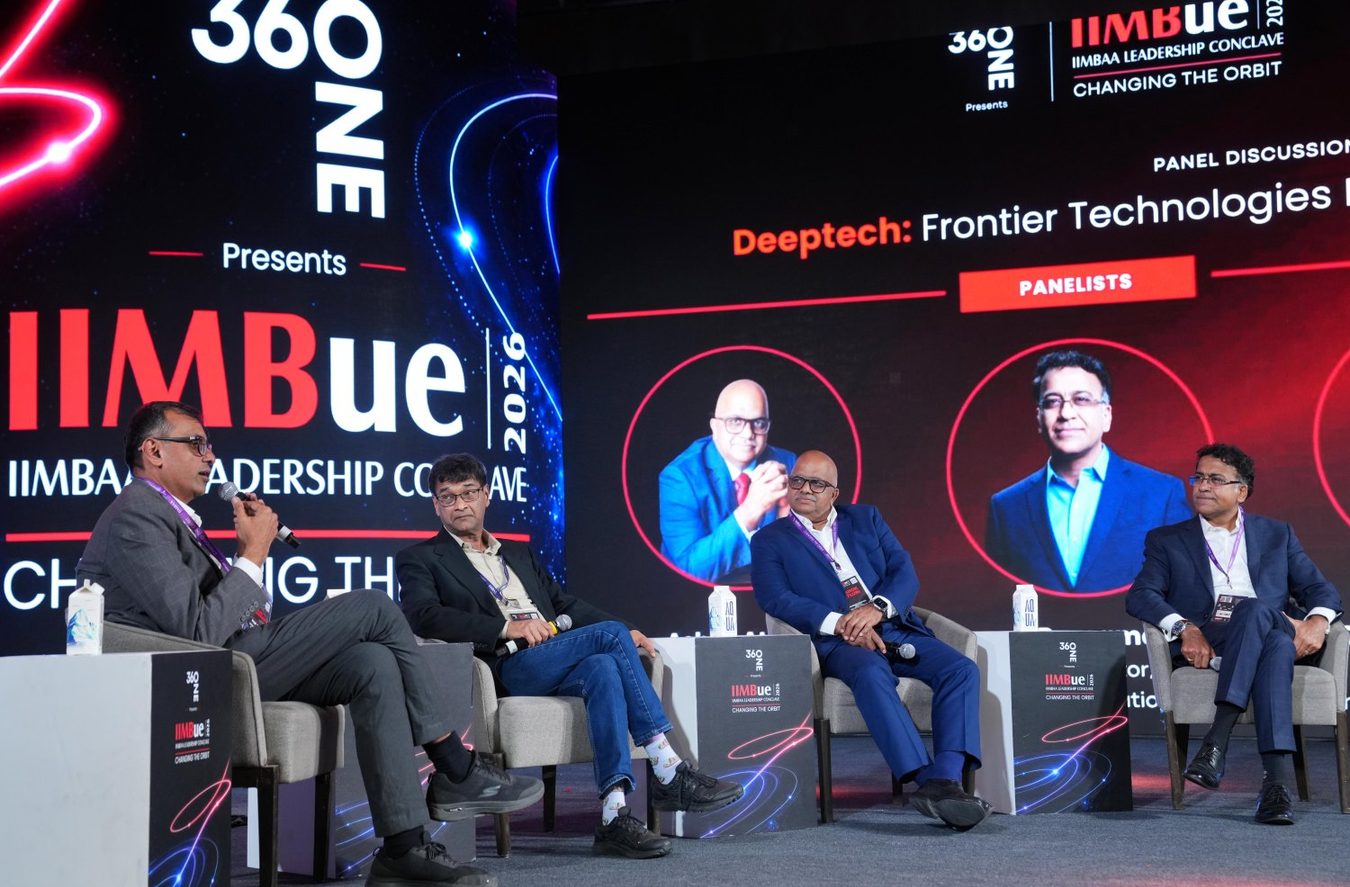
The deep-tech panel that followed looked at another aspect of India’s changing trajectory: the shift from being a technology user to becoming a technology creator. Leaders from Zen Technologies, Micron Technology India and L&T Semiconductor Technologies discussed the need for deeper R&D, patient capital, policy support and first-principles problem-solving as India builds its capabilities in semiconductors and other frontier technologies.
And then came a very different kind of leadership story.
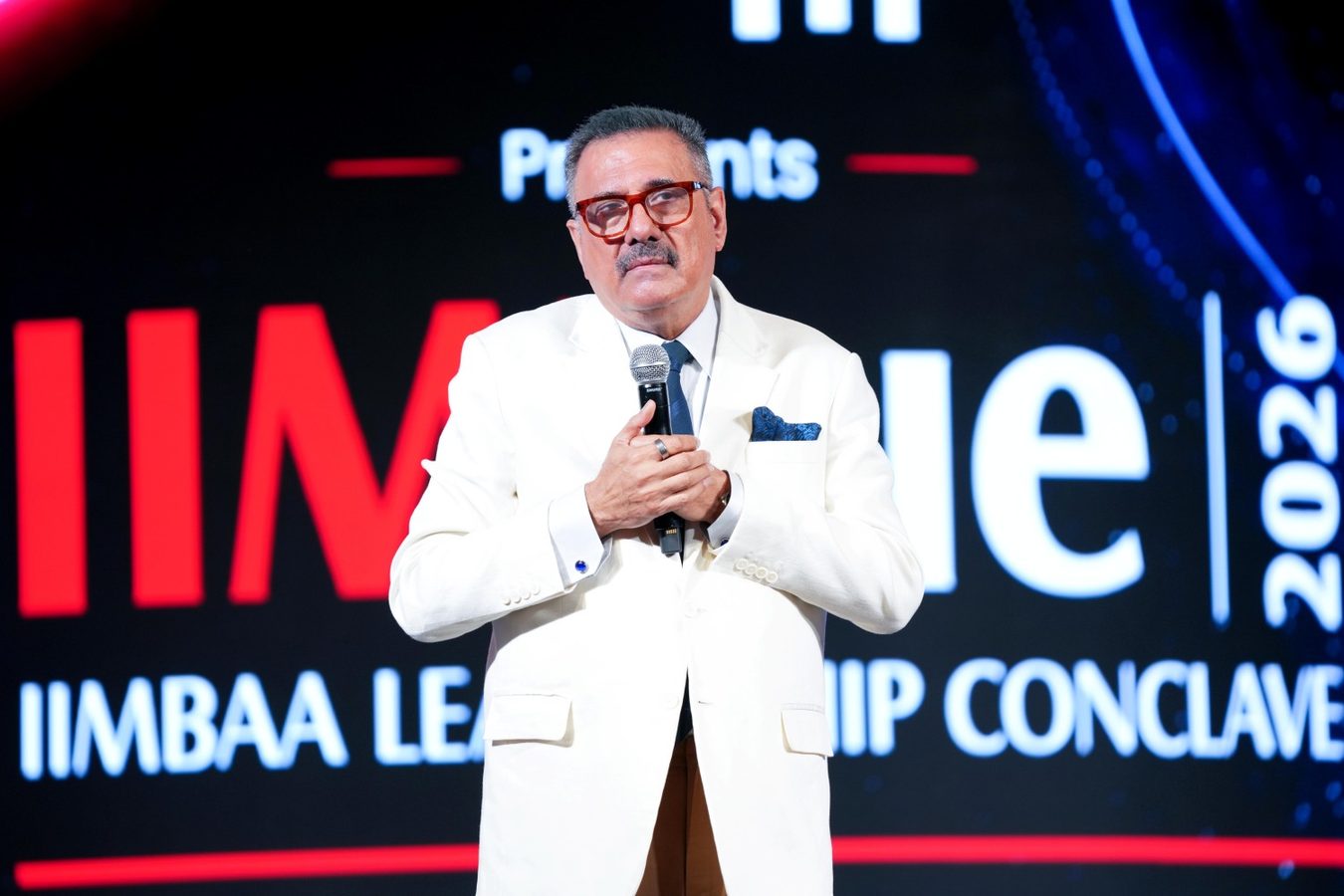
Boman Irani, Actor, Producer, Director and Storyteller, had the audience laughing before taking them through a deeply personal account of resilience and reinvention. From struggling with a stammer, dyslexia and poor academic performance to working at the Taj Mahal Hotel, running his family shop, becoming a sports photographer and eventually finding his way into cinema, Irani spoke about recognising opportunity wherever it appears—and pursuing what brings joy.
His stories of his mother, grandmother, his wife’s faith in his photography and his eventual breakthrough in Munnabhai MBBS gave the audience a reminder that careers rarely follow a neat plan.
Leadership with purpose
The theme of impact continued with Siddharth Sharma, CEO, Tata Trusts, who spoke about the difference between influence and lasting impact. His keynote on purpose-driven leadership explored the Tata philosophy of philanthropy and the importance of building institutions that can create change over decades.
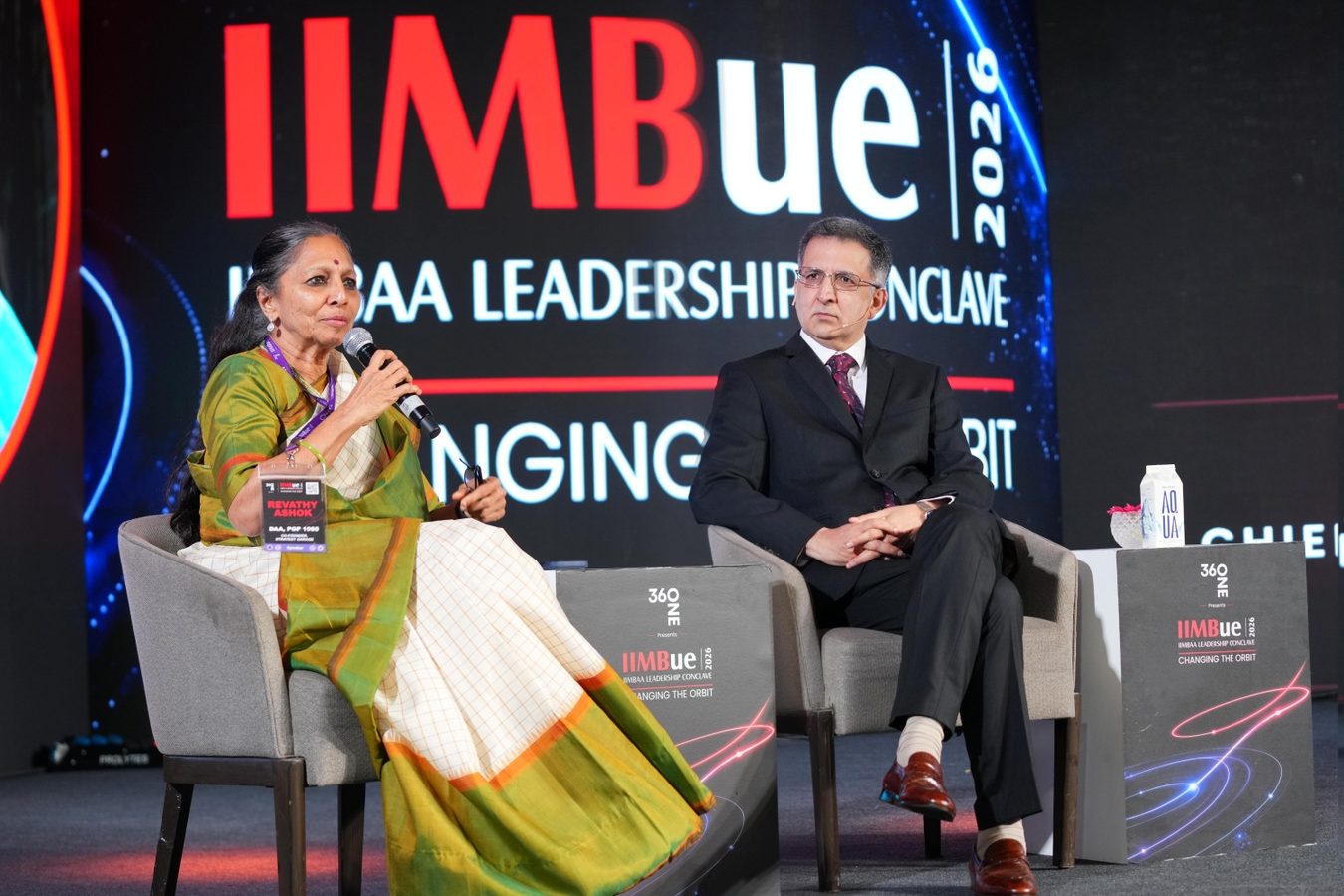
He also spoke about the Tata Trusts’ long history of investing in education, healthcare and institution-building, including its significant support for IIM Bangalore’s foray into undergraduate education. A subsequent fireside chat with IIMB alumna Revathy Ashok, PGP 1980, explored the relationship between business and social purpose and the distinctive model of philanthropy followed by the Tata Trusts.
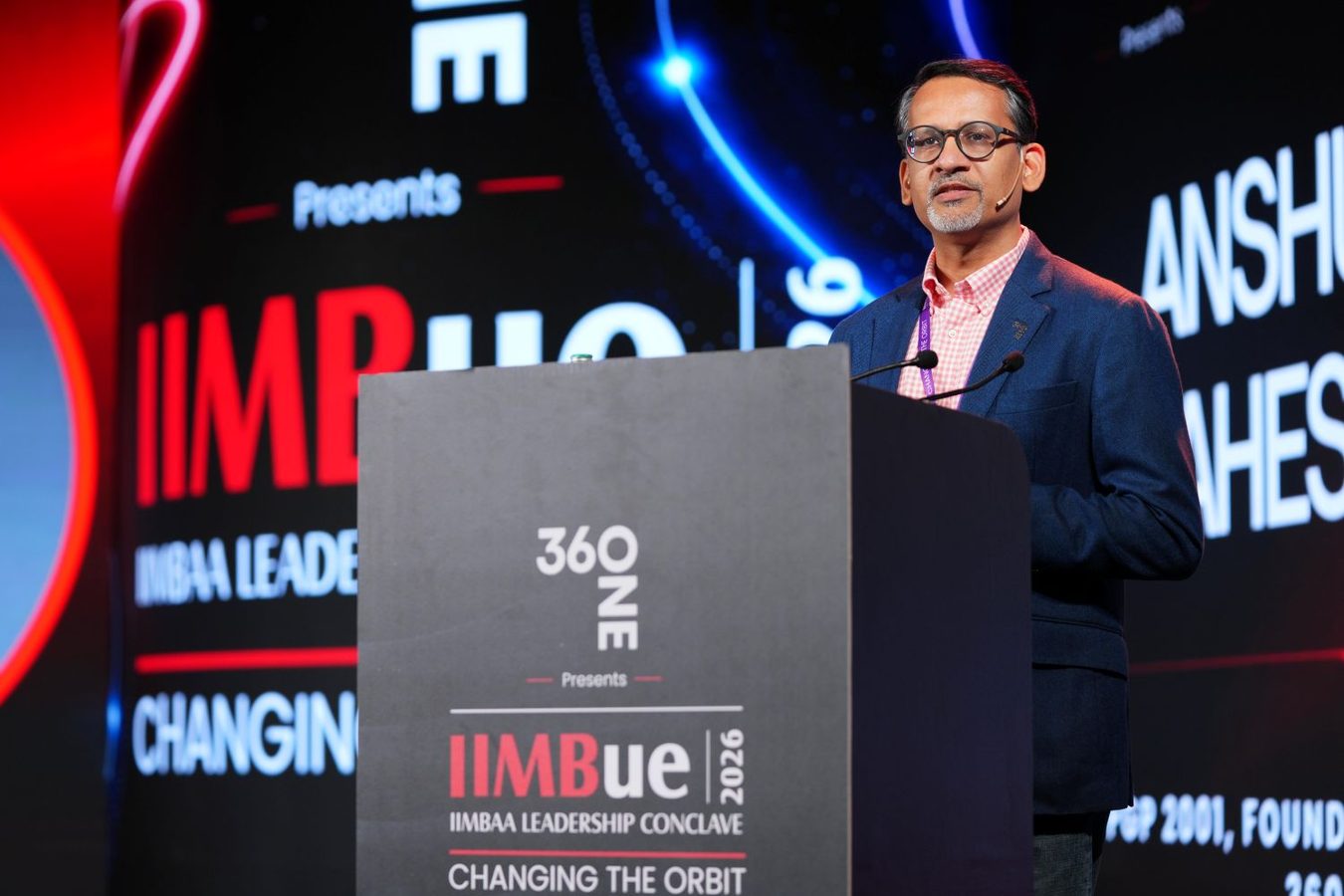
Another distinctly IIMB story came through From Campus to Leadership Orbit, where Anshuman Maheshwary recounted his journey with fellow alumnus Karan Bhagat. Having met before joining IIMB and spent their campus years debating ideas in the canteen, the two eventually took very different professional paths before reuniting as colleagues years later. Their story offered a reminder of the unexpected ways in which relationships and experiences from campus can shape careers long after graduation.
Day 1 closed by looking quite literally beyond Earth. P. Kunhikrishnan, Former Member, Space Commission and ISRO Distinguished Scientist, traced India’s space journey—from its early launches to the development of indigenous capabilities—and explored why space technology has become critical infrastructure for modern life. He highlighted the culture of multidisciplinary teamwork, learning from setbacks and institutional continuity that has shaped ISRO.
Inclusion, reinvention and resilience
If Day 1 explored how institutions and enterprises can change their trajectory, Day 2 turned the lens more directly towards people and organisations navigating disruption.
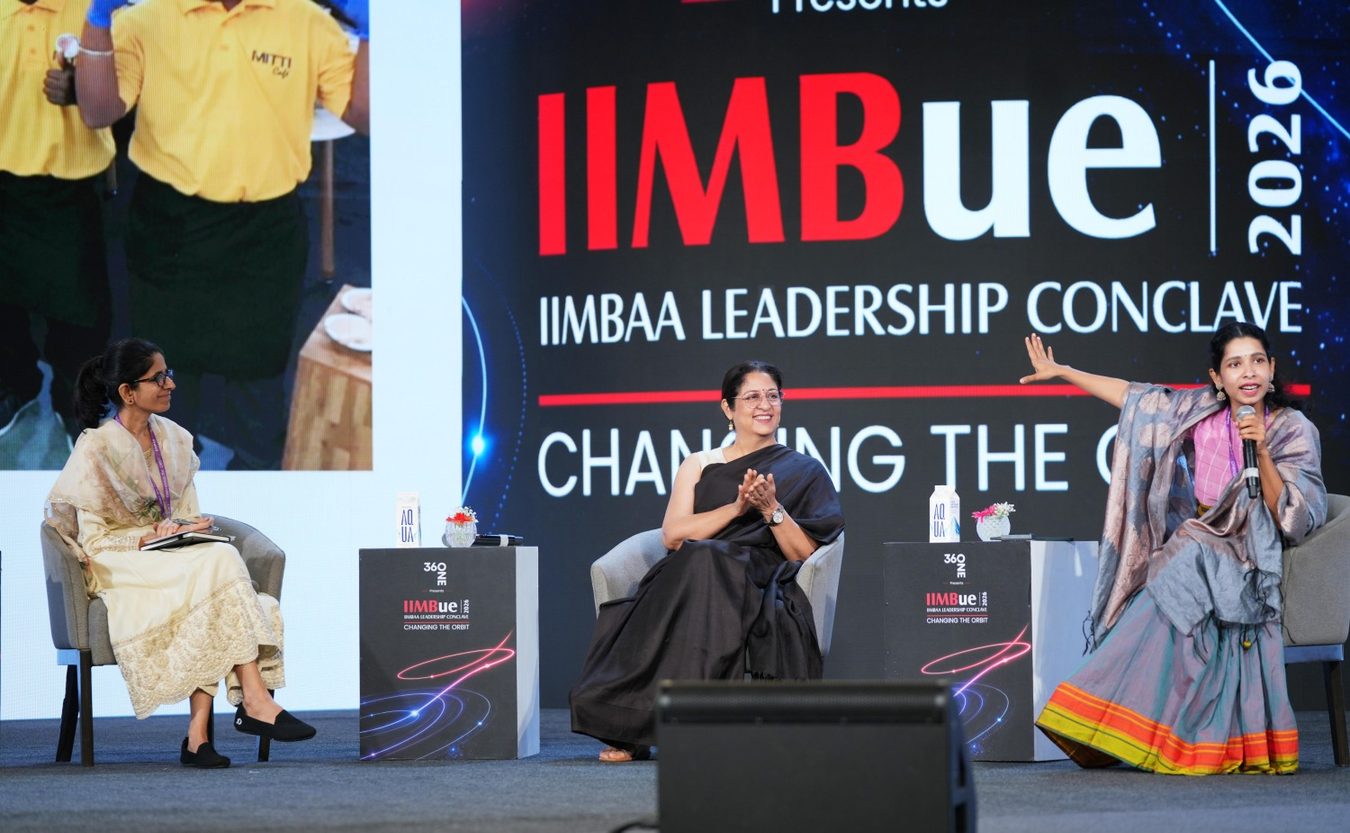
The opening session, Beyond Diversity: Humans in an Alien World, brought together Alina Alam, Founder & CEO, MITTI Café, and Safeena Husain, Founder, Educate Girls, in conversation with Prof. Mukta Kulkarni. The discussion examined the human and economic costs of exclusion, from disability and gender to the digital divide and access to education. Stories of resilience—including how MITTI Café found a way to support migrant workers during the pandemic—brought the conversation firmly from abstract ideas to lived experience.
The leadership panel The New Architecture of Growth brought together four IIMB alumni: Prof. Das Narayandas, PGP ’84; Manish Tiwary, PGP ’95; P R Seshadri, PGP ’88; and Prabha Narasimhan, PGP ’97. Their conversation focused on what leaders need to do when yesterday’s playbook no longer works: spot early signals, shorten the distance between decisions and action, reskill teams and become comfortable with technological change.
Their advice to younger professionals was equally direct: find a culture, company or cause where failure can become a source of learning.
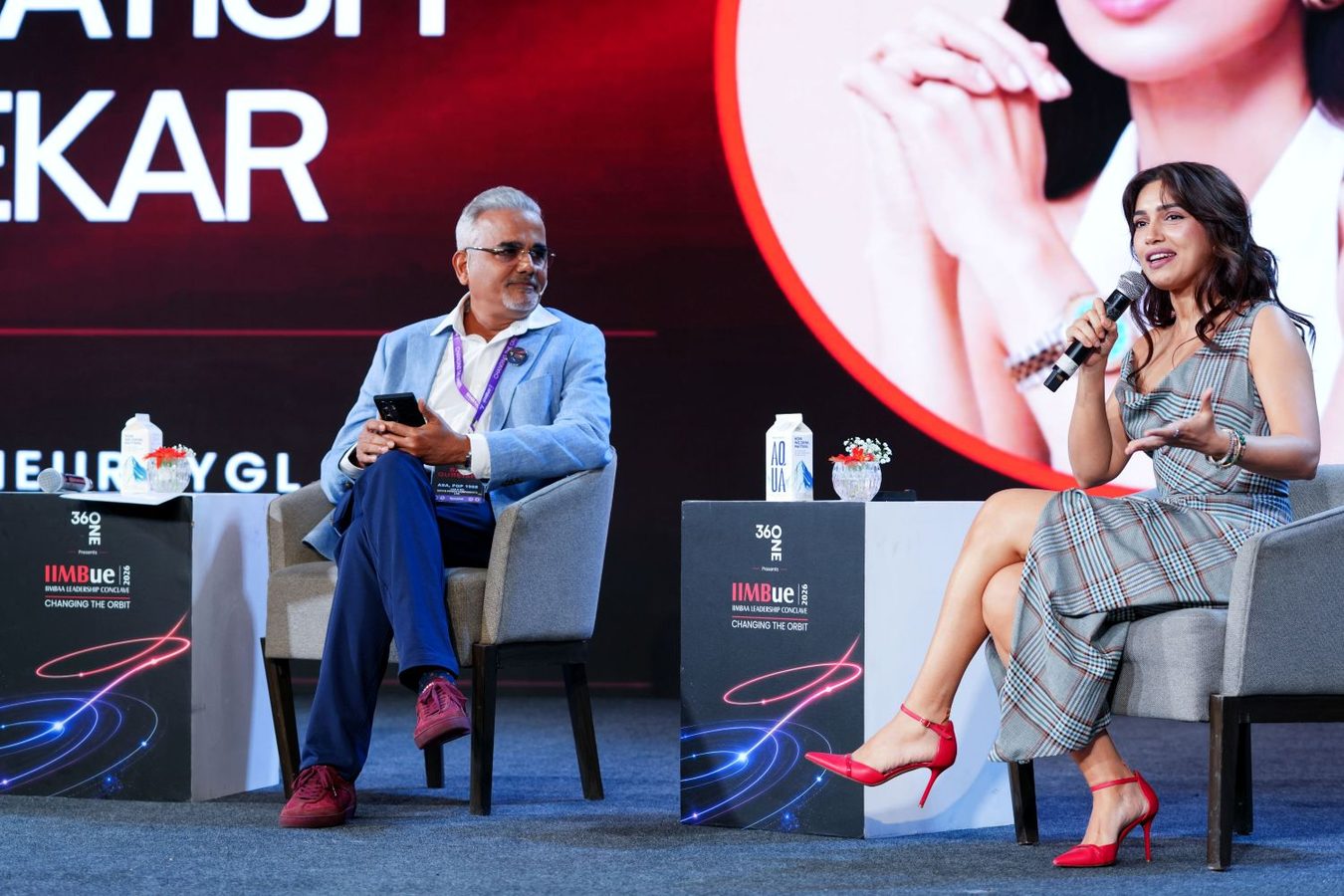
Bhumi Satish Pednekar, in conversation with IIMB alumnus Saif Qureishi, brought another perspective on reinvention. Speaking about her transition from acting to entrepreneurship and her engagement with social and environmental issues, she reflected on ambition, purpose and the need to reinvent oneself from an authentic place.
The conversation then moved to healthcare, where G V Prasad, Co-Chairman & MD, Dr. Reddy’s Laboratories, spoke about scaling a global healthcare enterprise. For Prasad, staying relevant is about growing into adjacencies while remaining anchored in access and innovation. He also emphasised fiscal conservatism, a learning-oriented culture and giving people room to fail and learn.
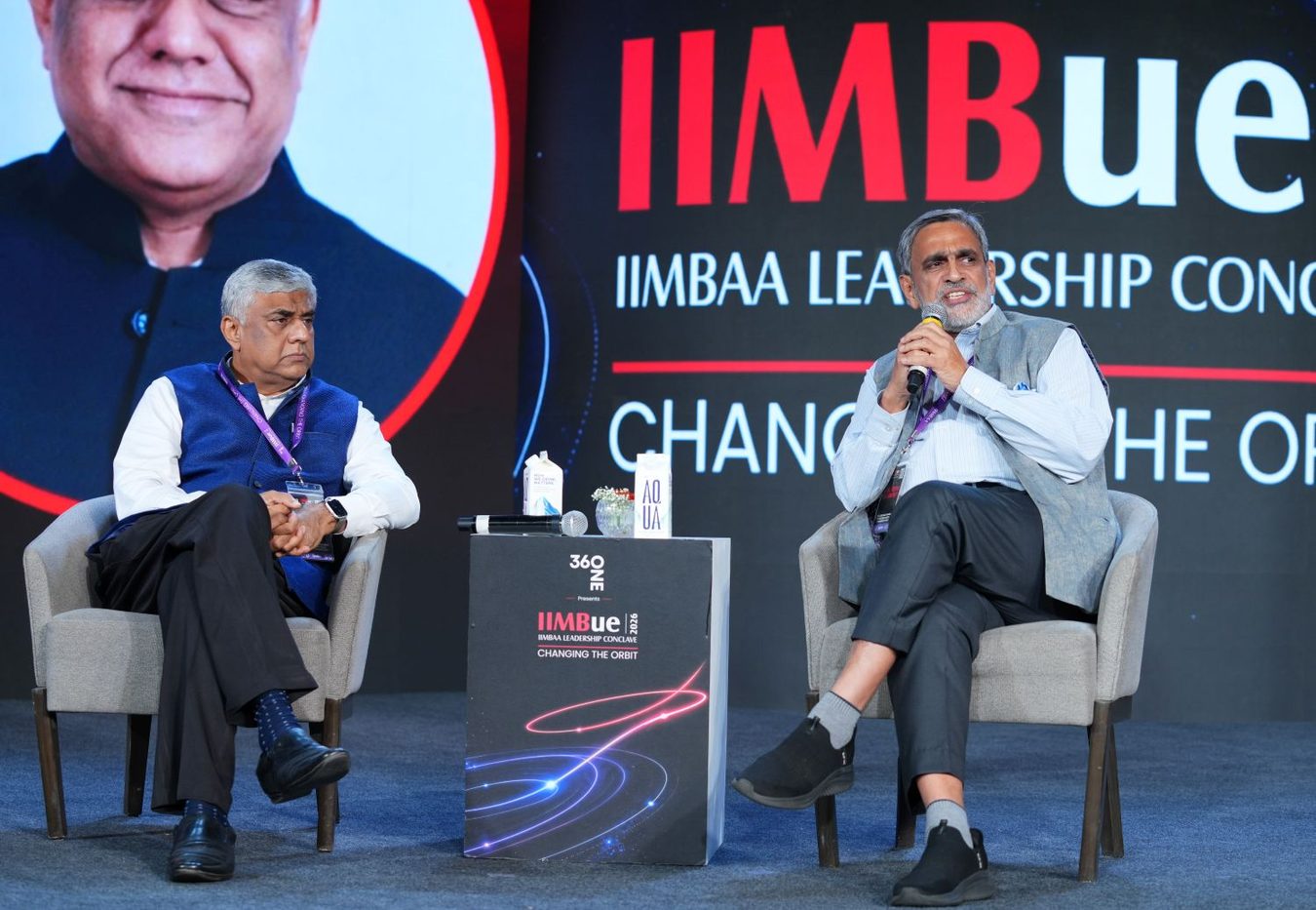
The Tata philosophy returned on Day 2 through Noel N. Tata, Chairman, Tata Trusts, in conversation with IIMB alumnus Sonjoy Chatterjee. Reflecting on his years at Trent and his transition into the social sector, Tata spoke about building institutions, allocating scarce resources meaningfully and measuring impact. He also reflected on the scale of India’s market and the need to create institutions of excellence for its young people.
The conclave concluded with a discussion on the changing geopolitical landscape, as Venu Rajamony, former Ambassador of India to the Netherlands, joined Prof. M.V. Rajeev Gowda. The conversation examined a world marked by conflict, strategic uncertainty, rising protectionism and a crisis of multilateralism. For India, the discussion pointed towards the importance of its greatest asset—its people and talent—while also recognising the need to address poverty, inequality and climate change.
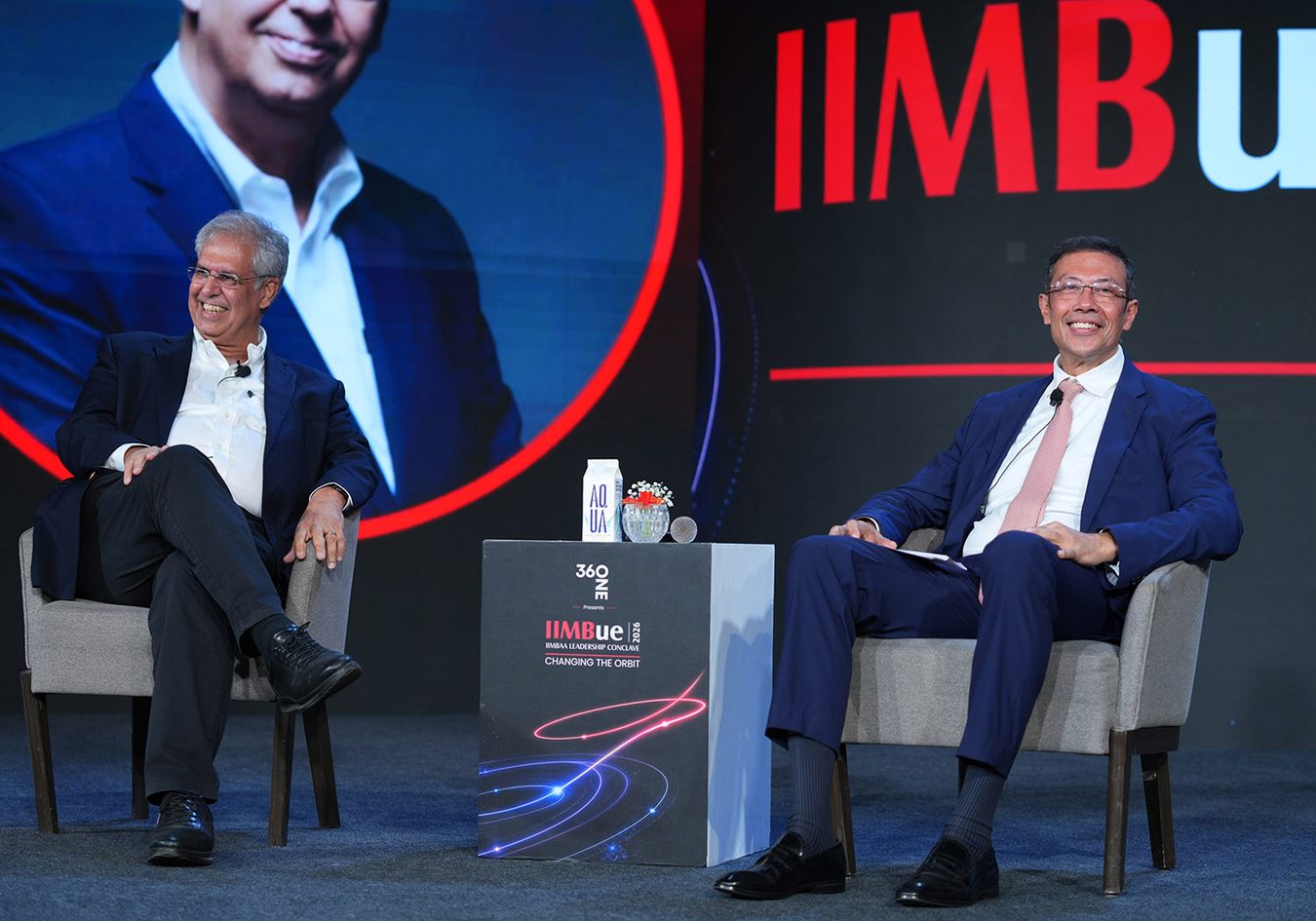
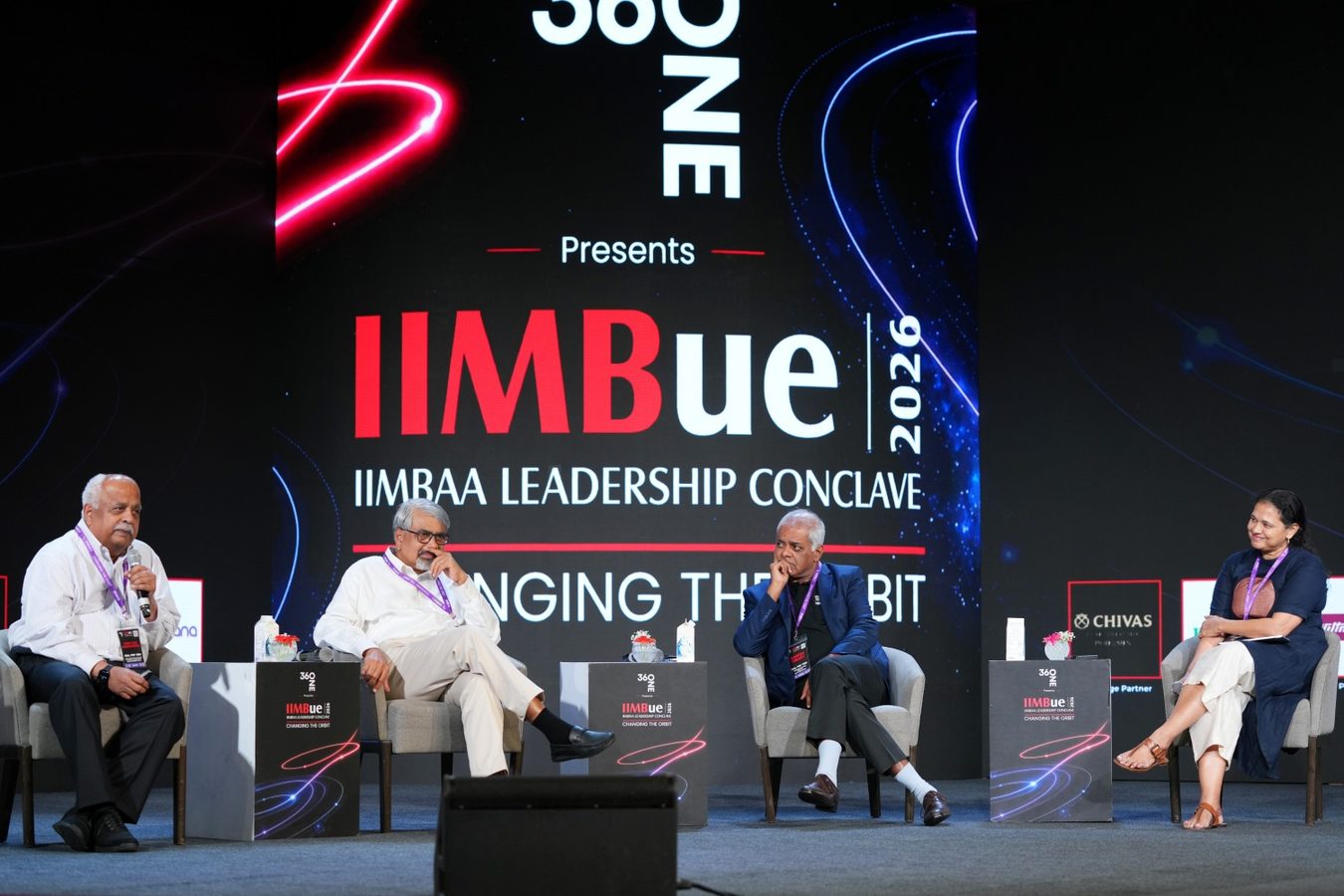
Across two days, the conversations at IIMBue 2026 returned repeatedly to one idea: changing the orbit is not simply about moving faster or getting bigger. It is about knowing when the old trajectory no longer works, having the courage to rethink it, and building the institutions, people and partnerships capable of creating a different one.
For an alumni-led conclave, perhaps that is also what made IIMBue distinctive: alongside conversations about markets, technology and geopolitics were stories about classrooms, canteens, first jobs, failures, unexpected opportunities and the journeys of people who continue to carry their IIMB experience into new orbits.
