

India can attract more tourists by reimagining visitor experiences
– Dr Amar Sapra
IIM Bangalore
India must improve tourism experiences at heritage sites to attract more foreign visitors and boost forex earnings.
Over the last few months, India’s inability to attract foreign tourists has been discussed extensively in the news media. There are primarily two factors behind this concern. One is the rupee’s sharp depreciation against major foreign currencies over the last year. One reason often cited for this depreciation is that more Indians are travelling abroad and purchasing foreign currency than foreign tourists are coming to India and purchasing rupees. While tourism is only one part of a much larger economy, a stronger tourism sector would increase foreign exchange earnings and should ease pressure on the rupee.
This naturally shifts attention to tourist inflow data, which reveals a deeper problem. The number of foreign tourists who visited India in 2025 (approximately 9 million) remains below the 2019 level, the last year before Covid-19. In contrast, countries such as Thailand and Vietnam have been far more successful in capitalising on the tourism rebound after the pandemic.
The discussion naturally then shifts to why India performs so poorly despite its history, size, landscape diversity and cultural richness. Typical reasons cited are polluted and crowded cities, concerns about safety for women, and poor infrastructure. All of these are valid. However, in my view, this is only part of the explanation. A crucial reason many tourists do not come is that we do a poor job of creating a fun and pleasant experience. At the end of the day, tourists come for entertainment, and we must take care of that need.
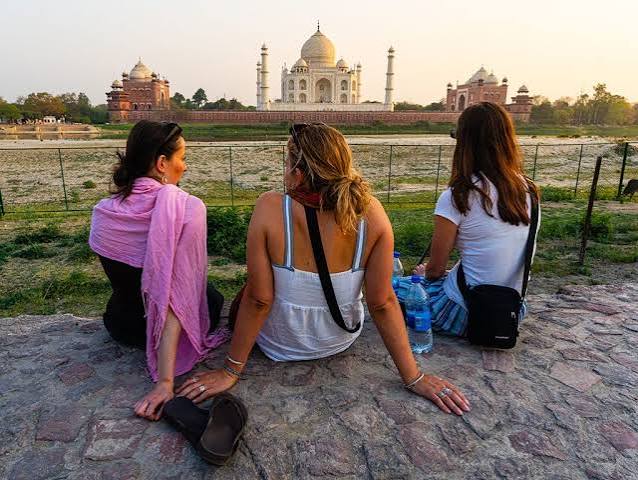
Let me illustrate this through the example of historical monuments. The way many of our monuments are currently presented lacks imagination. Consider Stonehenge in the UK. Architecturally, it is far simpler than many Indian monuments, yet it attracts close to 1.4 million visitors every year. By contrast, the Taj Mahal—arguably one of the most visually stunning monuments in the world—attracts about 7 million visitors annually.
What makes Stonehenge compelling is not just the monument itself, but the way it is curated. There is a small museum that tells the story of how it was built and how people lived at the time through videos and exhibits. There are designated selfie points around the site. There is even a loose stone of similar dimensions nearby that visitors can try to pull, helping them understand how many people of similar strength would have been needed to move it. There are also reconstructed huts showing how the builders of Stonehenge may have lived. All of these elements help stoke visitors’ imagination, making it an engaging experience.
Now contrast this with the experience of a tourist at the Taj Mahal. Without a guide, the visit often becomes little more than a photo opportunity. A guide is therefore usually necessary. However, the rates have to be negotiated, which itself is a hassle. Once a guide is selected, the experience is often limited to a few interesting anecdotes about the mausoleum. A simple Google search frequently reveals that some of these stories are inaccurate, or at least questionable.
Yet there is so much more that could be explained. The construction of the monument itself is a marvel. How did workers live in those days? How did the engineers maintain such precision in that era? How was the monument perceived during the reign of Shah Jahan, by later Mughal emperors and by the British? The possibilities are endless. Unfortunately, the current guide system does not incentivise deep historical storytelling or rigorous training. Why not create a video tour of parts of the monument that are off limits to tourists? Such an experience could even be monetised through a separate ticketed facility. The Taj Museum does provide some information, but it remains rooted in the 20th century.
Our current tourism philosophy ignores the fact that tourism is, in part, an entertainment business. It is crucial to make experiences interesting and memorable. Unfortunately, the current institutional structure does not seem equipped to solve this problem.
In my view, the answer is to create one or more public-private partnership companies whose objective would be to create engaging experiences. Ideally, these would include a minority government stake while remaining for-profit and privately managed. Government participation would make it easier to coordinate with other stakeholders such as local authorities, the police and the Archaeological Survey of India (ASI). In contrast, the involvement of the private sector would bring ideas for marketing and visitor engagement.
This would require separating the conservation and commercial aspects of monument management. Currently, both are handled by the ASI. While the ASI has done a reasonable job of preserving our heritage, engaging tourists is not necessarily its institutional strength. The private sector, by contrast, understands customer engagement much better. Such companies could therefore take responsibility for marketing, ticketing, designing shows and museums, and managing guides. They could also run marketing campaigns and promote newer destinations. Of course, the private partner would operate under strict guidelines to ensure that commercial activities do not deface or disrespect the monument.
To conclude, despite the challenges posed by our cities and infrastructure, India can and should do much better in earning foreign exchange through tourism. The bonus would be the creation of jobs that are AI-proof. But doing so will require creating new institutions whose explicit goal is to design memorable experiences for visitors.
